


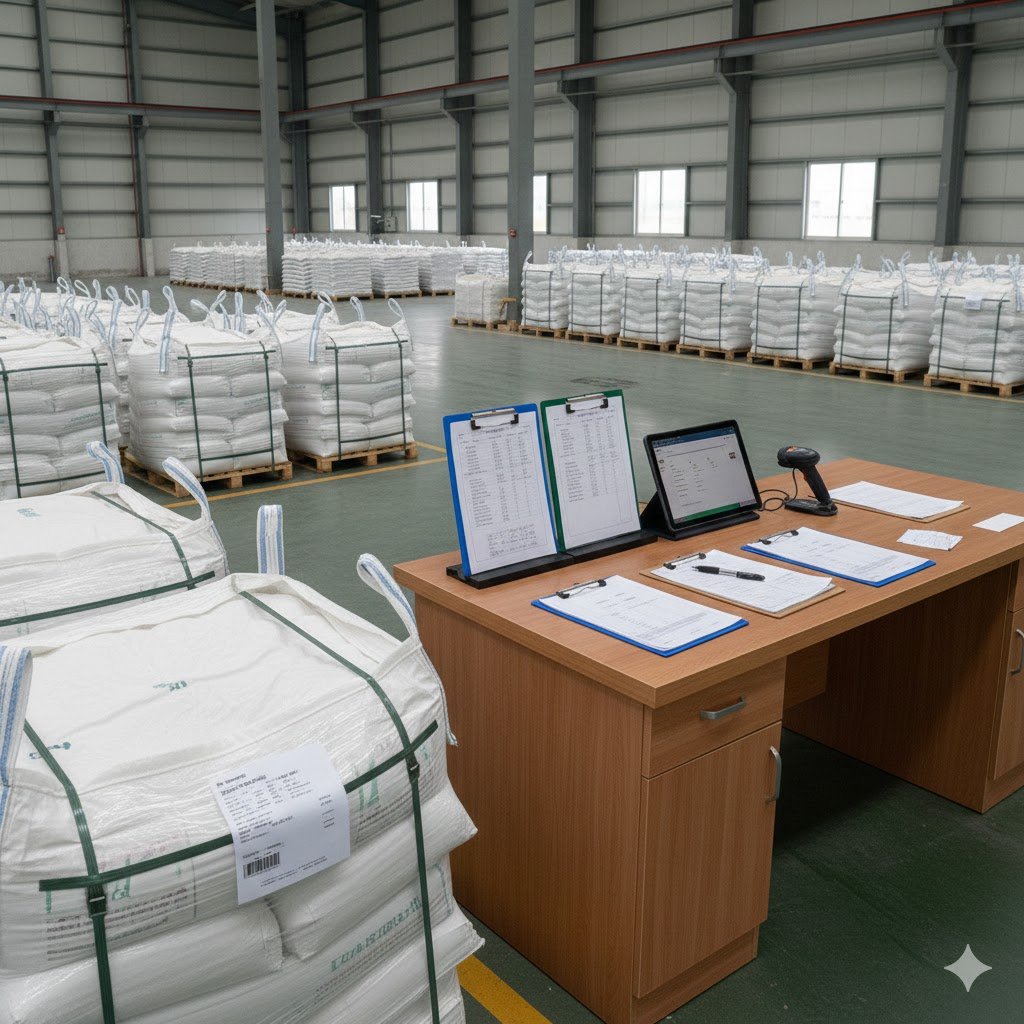
Buying kaolin in bulk requires more than comparing prices. Industrial buyers must evaluate product specifications, quality consistency, technical documentation, packaging, supply capacity, and delivery arrangements before choosing a mineral supplier.
A reliable bulk kaolin procurement process starts with selecting the right grade, defining measurable quality requirements, verifying technical documents, and agreeing on commercial and delivery terms.
Kaolin, also known as china clay, is used in industries such as ceramics, paper, paints and coatings, plastics, and rubber. However, different applications require different material properties. Particle-size distribution, brightness, moisture content, mineral composition, and other characteristics may influence processing conditions and the performance of the finished product.
For manufacturers purchasing kaolin regularly, even small variations in critical raw-material properties can create challenges in production planning and quality control. Evaluating a supplier systematically can help reduce procurement risks and establish clearer expectations before a bulk order is placed.
Green Trade India supplies kaolin products in different forms, including kaolin powder, kaolin noodles, kaolin granules, and crude kaolin for industrial requirements. This bulk kaolin procurement checklist explains the 15 essential questions buyers should ask before finalising a supplier.
Quick Checklist for Buying Kaolin in Bulk
Before placing a bulk kaolin order, verify these essential points:
- Confirm that the kaolin grade is suitable for your industrial application.
- Request a Technical Data Sheet (TDS) and relevant quality documentation.
- Check whether a batch-specific Certificate of Analysis (COA) is available.
- Establish specifications and acceptable tolerances for critical parameters.
- Understand the supplier's quality-testing and material-handling procedures.
- Confirm minimum order quantity (MOQ) and repeat-order capacity.
- Review packaging, storage, transportation, and loading arrangements.
- Request a sample for technical evaluation, where available.
- Compare the complete quotation, including freight, taxes, and other charges.
- Agree on payment terms, delivery timelines, and quality-dispute procedures in writing.
Use this checklist to compare suppliers on technical suitability, supply reliability, and total procurement cost rather than price alone.
1. Does the Supplier Offer the Right Kaolin Grade?
The first step in bulk kaolin procurement is identifying a grade that meets your manufacturing requirements. Kaolin grades can differ in particle-size distribution, brightness, moisture content, mineral composition, and other physical or chemical properties.
The right grade depends on how the material will be used. Ceramic manufacturers may prioritise plasticity, forming behaviour, firing characteristics, and fired colour. Paint and coating manufacturers may focus on particle size, brightness, dispersion, and compatibility with their formulations.
Paper, plastics, and rubber manufacturers may have different technical requirements depending on the product and production process.
Before choosing a kaolin supplier, ask:
- Which grades are available for your intended application?
- What physical and chemical specifications are provided for each grade?
- Which parameters are guaranteed, and which are reported as typical values?
- Can the supplier help identify a suitable grade based on your requirements?
Procurement tip: Share your application, expected order quantity, and target specifications before requesting a quotation. This helps you compare appropriate grades instead of selecting a product solely on price.
For product options, explore the relevant kaolin clay products available for your industrial requirements. Replace this placeholder with the actual Green Trade India product-page URL before publishing.
2. Can the Supplier Provide a Certificate of Analysis (COA)?
A Certificate of Analysis (COA) documents analytical results for specified properties of a material or production batch. When batch-specific results are provided, the COA helps buyers assess whether the tested material meets the agreed specifications.
Depending on the kaolin grade and intended application, a COA may include:
- Moisture content
- Particle-size measurements
- Whiteness or brightness
- pH value
- Chemical composition
- Loss on ignition
- Other relevant quality parameters
Not every kaolin grade requires the same tests. Buyers should identify the parameters that matter to their manufacturing process and agree on the required documentation before ordering.
Ask your supplier whether the COA relates to the actual batch being purchased, which testing methods are used, and how the reported results are compared with the agreed acceptance limits.
A batch-specific COA is particularly useful for repeat procurement because it provides a documented basis for checking incoming material.
3. Is a Technical Data Sheet (TDS) Available?
A Technical Data Sheet (TDS) describes the typical properties, specifications, and relevant application information of a kaolin product. It helps procurement and production teams evaluate a grade before purchasing large quantities.
A kaolin TDS may include particle-size distribution, brightness, moisture content, pH, chemical composition, and other grade-specific characteristics.
Before approving a product, check whether the TDS:
- Clearly identifies the product or grade.
- Provides relevant technical parameters and measurement units.
- Distinguishes typical values from guaranteed specifications.
- Includes appropriate application information.
- Matches the requirements communicated to the supplier.
What Is the Difference Between a Kaolin COA and TDS?
| Comparison | Certificate of Analysis (COA) | Technical Data Sheet (TDS) |
|---|---|---|
| Main purpose | Reports analytical results | Describes typical properties and specifications |
| Data type | Results for specified tests or a particular batch, when batch-specific | Typical values, specified limits, and product information |
| Primary use | Assessing conformity with agreed requirements | Evaluating product suitability before purchasing |
| Procurement stage | Particularly useful for batch verification | Particularly useful for grade selection and comparison |
Both documents support informed procurement, but they serve different purposes. Review the TDS when selecting a grade and use the relevant COA to verify the material against the agreed specifications.
4. How Consistent Is the Quality Between Batches?
Batch-to-batch consistency is important for manufacturers that use kaolin regularly. Variations in moisture, particle size, brightness, mineral composition, or other critical parameters may affect processing conditions and finished-product quality.
A supplier should be able to explain how material quality is assessed and how deviations from specifications are managed.
Ask these questions:
- Which quality parameters are monitored routinely?
- How are specifications and acceptable tolerances established?
- Are batches tested against documented quality criteria?
- How are variations investigated and communicated?
- Can repeat orders be supplied against an agreed specification?
Where possible, establish written acceptance limits for the parameters that directly influence your production process. This gives both parties a clear reference for evaluating incoming material.
For repeat purchases, retain relevant COAs and incoming inspection records so your team can compare results over time.
5. What Is the Minimum Order Quantity (MOQ)?
The minimum order quantity affects purchasing budgets, inventory levels, warehouse capacity, and cash flow. Large manufacturers may need regular high-volume deliveries, while smaller businesses may prefer a trial quantity before committing to a larger order.
When evaluating a bulk kaolin supplier, clarify:
- The MOQ for each available grade.
- Whether samples or smaller evaluation quantities are available.
- How pricing changes with order volume, where applicable.
- Whether repeat deliveries can be scheduled.
- Whether special packaging requires a minimum quantity.
The right MOQ should align with your consumption rate, production schedule, storage capacity, and purchasing budget.
Avoid ordering more material than your facility can store or reasonably consume within its planned inventory cycle.
6. Can the Supplier Handle Large and Repeat Orders?
A supplier may offer a suitable kaolin grade but may not have the capacity or supply arrangements needed to fulfil your long-term requirements.
For manufacturers that depend on continuous production, supply reliability is an important part of supplier selection.
Before placing an order, discuss:
- Current product availability.
- Production or sourcing capacity.
- Expected order-processing and dispatch timelines.
- Capacity to accommodate repeat orders.
- Monthly or quarterly volume requirements.
- Communication procedures for delays or supply changes.
If your business consumes kaolin regularly, share a realistic demand forecast and ask whether the supplier can accommodate your planned volumes.
Evaluate supply commitments based on documented availability, agreed schedules, and clear communication rather than assumptions about future capacity.
7. What Packaging Options Are Available for Bulk Kaolin?
Packaging affects transportation, warehouse storage, material handling, loading, and protection against moisture or contamination.
Depending on the product and the supplier's arrangements, kaolin may be supplied in 25 kg bags, 50 kg bags, jumbo bags, or other agreed formats.
Before confirming your purchase, ask about:
- Available bag sizes and packaging materials.
- Packaging suitability for the product and transport conditions.
- Bag strength, labelling, and batch identification.
- Palletisation and loading arrangements.
- Special packaging or handling requirements.
- Availability of the preferred format for your order quantity.
The best packaging option depends on order volume, handling equipment, transport arrangements, warehouse capacity, and how your facility receives and stores raw materials.
For example, smaller bags may suit manual handling, while jumbo bags may be appropriate for facilities equipped for bulk-material handling. Confirm the actual options available for your selected grade before ordering.
8. How Is the Kaolin Stored Before Dispatch?
Proper storage and handling help maintain the condition of kaolin before delivery. Exposure to moisture, dust, foreign material, or unsuitable storage conditions may create quality concerns.
Ask your supplier how the product is stored, whether it is protected from moisture and contamination, and how packed material is handled before dispatch.
You should also confirm:
- How material is protected during storage.
- Whether packaging is checked before dispatch.
- How batch identification is maintained.
- What transport precautions are required.
- How the material should be stored after delivery.
Buyers should also ensure that their own warehouses can maintain suitable storage conditions until the kaolin is used.
Clear storage and handling procedures help both suppliers and buyers reduce avoidable contamination risks.
9. What Quality Testing Methods Are Used?
Quality testing helps determine whether a kaolin grade meets the specifications relevant to its intended application. The appropriate testing programme depends on the product, agreed quality requirements, and manufacturing process.
Potential tests include particle-size distribution, moisture content, brightness, pH, chemical composition, and loss on ignition. Other tests may be required for specific grades or applications.
Ask your supplier:
- Which parameters are tested?
- Which test methods and units are used?
- How frequently are tests performed?
- Are test results documented and available for review?
- What acceptance limits apply to critical properties?
For meaningful comparisons, use consistent test methods and agreed specifications across shortlisted suppliers.
Where a particular property is essential to your production process, document the required test method, sampling procedure, and acceptable limits before placing the order.
10. Can You Request a Sample Before Bulk Purchasing?
Testing a kaolin sample allows your technical team to assess product suitability before committing to a large quantity. It can help identify potential processing or compatibility issues and determine whether the proposed grade meets your requirements.
Ask the supplier whether samples are available, what quantities can be provided, and whether any sample or delivery charges apply.
For an effective evaluation:
- Confirm that the sample represents the proposed kaolin grade.
- Identify the technical parameters that need to be tested.
- Use relevant test methods and acceptance criteria.
- Evaluate the material under actual or representative production conditions, where practical.
- Document the results before approving the bulk purchase.
The evaluation may focus on dispersion, processing behaviour, compatibility, firing characteristics, or other application-specific properties.
Important: Sample approval should be supported by clear specifications. Where feasible, confirm how the supplied bulk material will be checked against the approved grade and agreed quality requirements.
11. How Competitive and Transparent Is the Pricing?
The lowest quoted price does not necessarily represent the lowest total procurement cost. Differences in product grade, packaging, freight, taxes, delivery terms, and payment conditions can change the overall cost of buying kaolin.
When comparing quotations, verify:
- Price per unit of weight.
- Minimum order quantity and applicable volume pricing.
- Packaging and loading charges.
- Transportation and delivery costs.
- Applicable taxes and additional fees.
- Payment terms and quotation validity.
- Delivery location and pricing basis.
Where relevant, clarify whether the quotation uses Ex Works, delivered pricing, or another agreed delivery arrangement or Incoterm.
How to Compare Kaolin Supplier Quotations
| Cost or condition | What to check |
|---|---|
| Product price | Same grade, specifications, and quantity |
| Packaging | Bag type, size, and associated costs |
| Transportation | Freight, loading, and delivery responsibilities |
| Taxes | Applicable taxes and other charges |
| Payment | Advance, credit, and payment deadlines |
| Delivery | Dispatch schedule and delivery location |
Compare equivalent quotations rather than comparing product prices in isolation. This gives your procurement team a more reliable basis for selecting a supplier.
12. What Are the Delivery Timelines and Logistics Arrangements?
Delivery delays can affect production schedules, inventory planning, and customer commitments. Before placing a bulk kaolin order, establish the expected dispatch date, transit time, delivery location, and transportation responsibilities.
Ask your supplier:
- What is the expected lead time for the required quantity?
- Is the product available from stock or subject to a production or sourcing lead time?
- Who arranges transportation and unloading?
- How will dispatch and delivery updates be communicated?
- What happens if a shipment is delayed or damaged?
- Can repeat deliveries be scheduled against a forecast?
For interstate or international shipments, clarify freight responsibilities, required documentation, delivery terms, and any applicable regulatory requirements before confirming the purchase order.
Document the delivery schedule and the process for communicating changes. For ongoing procurement, agreed replenishment schedules can help your team plan inventory more effectively.
13. Does the Supplier Have Experience in Your Industry?
Industry experience can help a supplier explain which kaolin properties matter for a particular application. However, the suitability of any grade should still be confirmed through technical documentation and appropriate testing.
Different industries may prioritise different characteristics.
| Industry | Properties buyers may evaluate |
|---|---|
| Ceramics | Plasticity, forming behaviour, firing characteristics, and fired colour |
| Paper | Brightness, particle size, coating requirements, and application-specific performance |
| Paints and coatings | Particle size, brightness, dispersion, and formulation compatibility |
| Plastics | Particle characteristics, moisture, dispersion, and compatibility with the polymer system |
| Rubber | Particle characteristics, moisture, dispersion, and suitability for the formulation |
These are general evaluation considerations rather than universal specifications. Requirements vary by grade, formulation, and intended end use.
Ask the supplier whether it can explain the relevant properties of the proposed material and provide technical documentation to support your evaluation.
A knowledgeable supplier should help you understand the available information without making unsupported performance claims.
14. What Are the Payment Terms and Documentation Requirements?
Commercial terms should be clear before a bulk kaolin order is confirmed. Unclear payment conditions, incomplete invoices, or missing delivery documents can delay procurement and receipt of materials.
Discuss the following with your supplier:
- Advance payment, credit terms, or other agreed payment arrangements.
- Invoice and purchase-order requirements.
- Product grade, quantity, and unit of measurement.
- Agreed technical specifications and quality documentation.
- Batch identification and delivery records.
- Any additional documents required by your organisation.
Ensure that your purchase order identifies the product, quantity, delivery location, pricing basis, applicable quality requirements, and agreed supporting documents.
If your organisation follows internal quality-management or compliance procedures, communicate the documentation requirements before the shipment is prepared.
15. What Happens if the Delivered Material Does Not Meet Specifications?
A clear non-conformance procedure helps buyers and suppliers resolve quality discrepancies when delivered kaolin does not meet the agreed requirements.
Before placing an order, establish how deviations will be reported, investigated, and resolved.
Confirm:
- The inspection and notification period after delivery.
- The information and test evidence required for a complaint.
- Whether retained samples or independent testing may be used.
- How the supplier will investigate reported discrepancies.
- The agreed procedure for replacement, credit, refund, or another corrective action, where applicable.
Keep the purchase order, relevant COA, delivery records, batch identification, and test results available for reference.
Documenting the process before purchasing reduces ambiguity and provides a clear basis for resolving disputes.
How to Choose the Right Bulk Kaolin Supplier
Choosing the right bulk kaolin supplier involves more than comparing quotations. Buyers should assess technical suitability, quality documentation, batch consistency, supply capacity, packaging, logistics, and commercial terms together.
Use the following table to compare potential suppliers.
| Supplier evaluation criterion | What to verify before ordering |
|---|---|
| Product suitability | The grade matches your intended application and specifications. |
| Technical documentation | A relevant TDS and agreed COA documentation are available. |
| Quality control | Testing methods, tolerances, and non-conformance procedures are clear. |
| Supply capacity | MOQ, expected volumes, lead times, and repeat-order arrangements are suitable. |
| Packaging and storage | Available formats and handling arrangements meet operational needs. |
| Pricing | Product price, freight, taxes, and other charges are transparent. |
| Delivery reliability | Delivery responsibilities and schedules are agreed. |
| Technical support | The supplier can explain relevant specifications and documentation. |
Green Trade India supplies kaolin products in different forms, including kaolin powder, kaolin noodles, kaolin granules, and crude kaolin for industrial requirements.
Businesses evaluating kaolin for bulk procurement can discuss their intended application, required product form, order quantity, relevant specifications, and preferred packaging to determine which available options merit further evaluation.
Looking for kaolin products for industrial use? Contact Green Trade India to discuss your procurement requirements and request information about relevant product grades, specifications, and supply arrangements.
Conclusion: Make Bulk Kaolin Procurement More Reliable
A structured bulk kaolin procurement checklist helps industrial buyers evaluate suppliers on product suitability, technical documentation, quality consistency, packaging, pricing, and supply reliability.
Before committing to a large order, define your technical requirements, review the available TDS, request relevant COA documentation, test a sample where appropriate, and agree on delivery and quality-acceptance terms in writing.
Whether you need kaolin for ceramics, paper, paints and coatings, plastics, or rubber, a well-defined procurement process can help your team compare suppliers more effectively and manage avoidable sourcing risks.
Planning a bulk kaolin purchase? Contact Green Trade India to discuss your application, required product form, order volume, and technical specifications.
Frequently Asked Questions About Bulk Kaolin Procurement
1. What should I ask a kaolin supplier before placing a bulk order?
Ask about the kaolin grade, technical specifications, COA, TDS, batch consistency, quality testing, minimum order quantity, packaging, pricing, delivery timelines, and payment terms. You should also clarify sample availability and the procedure for handling material that does not meet agreed specifications.
2. How do I choose the right kaolin grade for my application?
Identify your application's technical requirements and compare them with the supplier's product specifications. Relevant parameters may include particle-size distribution, brightness, moisture, pH, chemical composition, and other application-specific properties. Review the TDS and evaluate a sample where appropriate.
3. What is a Certificate of Analysis (COA) for kaolin?
A COA is a document containing analytical results for specified properties of a material or batch. Depending on the grade, it may report moisture, particle size, brightness, pH, chemical composition, and other relevant parameters. Buyers use the results to assess conformity with agreed specifications.
4. Why is a Technical Data Sheet (TDS) important when buying kaolin in bulk?
A TDS describes a kaolin product's typical properties, specifications, and relevant application information. It helps procurement and technical teams assess suitability, compare available grades, and identify the parameters that may need to be verified through testing.
5. What packaging options are available for bulk kaolin orders?
Common packaging options may include 25 kg bags, 50 kg bags, and jumbo bags, depending on the product and supplier's arrangements. The appropriate format depends on order quantity, transportation, warehouse capacity, and material-handling equipment. Confirm the available options before placing an order.
6. Why should I test a kaolin sample before placing a large order?
Sample testing allows your technical team to evaluate whether a proposed kaolin grade is suitable for your manufacturing process. It can help identify potential compatibility or processing issues before committing to a larger quantity. Agree on relevant test methods and acceptance criteria before scaling up.
7. How can I compare bulk kaolin suppliers fairly?
Compare suppliers using the same product specifications, order quantity, delivery location, packaging requirements, and pricing basis. Also assess technical documentation, testing procedures, supply capacity, lead times, payment terms, and procedures for resolving quality discrepancies.
8. What factors affect the cost of bulk kaolin procurement?
The overall procurement cost may depend on the kaolin grade, order quantity, packaging, transportation, taxes, delivery terms, and payment conditions. Comparing complete quotations against equivalent product specifications provides a more useful assessment than comparing product prices alone.