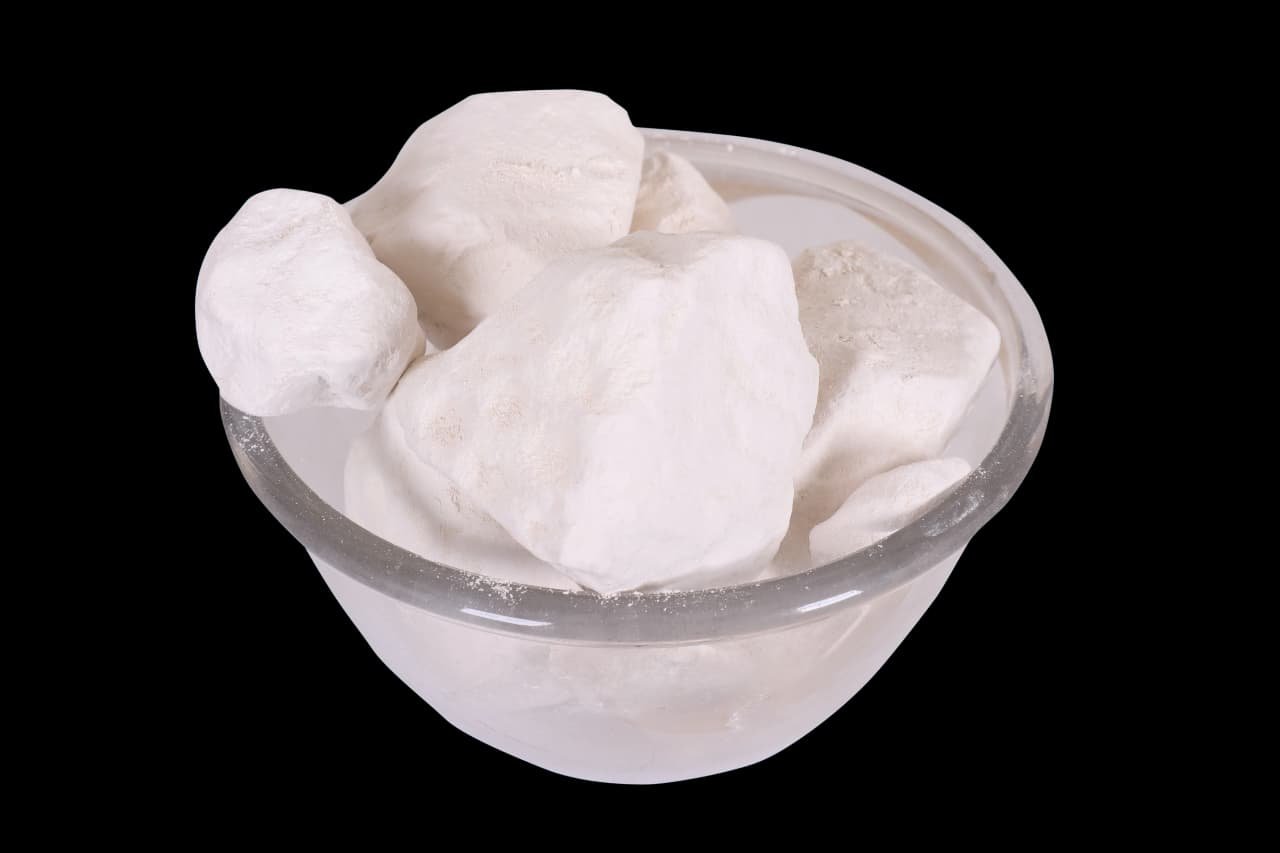
How to Choose the Right Kaolin Clay Grade
Choosing the right kaolin clay grade depends on the intended application, processing method and technical requirements of the finished product. Different industries may require kaolin with specific levels of whiteness, particle size, moisture, purity, chemical composition, oil absorption and thermal characteristics.
Before selecting a kaolin clay grade, buyers should consider the following factors:
1. Consider the End Application
The required kaolin grade can vary significantly depending on where it will be used.
- Ceramics: Consider particle size, plasticity, whiteness, iron content and firing behaviour.
- Paper: Brightness, particle size, purity and dispersion are important considerations.
- Paints & Coatings: Particle size, whiteness, oil absorption and dispersion characteristics can influence formulation requirements.
- Rubber & Plastics: Particle size, moisture, surface characteristics and compatibility with the formulation should be evaluated.
- Refractories: Chemical composition, alumina content and high-temperature behaviour can be important.
- Construction Materials: Consistency, particle size, moisture and compatibility with the specific formulation should be considered.
2. Check Particle Size
Particle size can influence the dispersion, surface area, texture and processing behaviour of kaolin clay.
Fine-particle kaolin may be preferred for applications requiring smooth dispersion and a controlled surface finish, while coarser material may be suitable for applications involving further grinding or processing.
The appropriate particle-size specification should therefore be selected according to the manufacturing process and end product.
3. Evaluate Whiteness and Brightness
Whiteness and brightness can be important when kaolin is used in products where appearance or optical properties matter, such as ceramics, paper, paints and coatings.
The required level depends on the application and the specifications of the finished product.
4. Check Chemical Composition
The chemical composition of kaolin can vary depending on its mineral source and processing method.
Important parameters may include:
- Silicon dioxide (SiO₂)
- Aluminium oxide (Al₂O₃)
- Iron oxide (Fe₂O₃)
- Titanium dioxide (TiO₂)
- Calcium oxide (CaO)
- Magnesium oxide (MgO)
- Potassium oxide (K₂O)
- Loss on ignition (LOI)
For applications with strict formulation requirements, buyers should compare the supplier's technical specifications or Certificate of Analysis (COA) with their required parameters.
5. Consider Moisture Content
Moisture content can affect transportation, storage, handling and processing.
For applications involving dry blending or controlled formulations, buyers should confirm the required moisture specification before placing a bulk order.
6. Consider the Form of Kaolin
Kaolin can be supplied in different forms depending on the customer's processing requirements, including:
- Kaolin powder – suitable for direct blending and formulation.
- Kaolin lumps – suitable for customers carrying out further crushing, grinding or processing.
- Kaolin noodles – suitable for applications where controlled handling and reduced dust generation are important.
The most suitable form depends on the buyer's equipment, production process and handling requirements.
7. Compare Technical Specifications, Not Just Price
The lowest-priced kaolin clay may not always be the most suitable option for a particular application. Buyers should compare important specifications such as particle size, whiteness, moisture, chemical composition, purity and consistency alongside the quoted price.
For bulk procurement, consistency between batches can also be an important consideration.
8. Request a Sample or COA
Before purchasing a large quantity, buyers can request a product sample and Certificate of Analysis (COA) where available. Testing the material in the actual manufacturing process can help confirm whether the selected grade meets the required performance and quality specifications.
Raw Kaolin Clay vs Processed Kaolin
| Raw Kaolin |
Processed Kaolin |
| Naturally mined material | Further processed |
| Minimal processing | May involve washing/classification/calcination |
| Suitable for further processing | Can be application-specific |
| Generally more variable | More controlled specifications |
Green Trade India can help buyers identify the appropriate kaolin form and specification based on their manufacturing process.
Kaolin Clay Manufacturer & Supplier in India
Green Trade India is a kaolin clay manufacturer and supplier in India, based in Gujarat. We supply raw kaolin and kaolin products for industrial applications across domestic and international markets.
Our supply capabilities include multiple product forms, customized specifications, bulk packaging and export documentation support. Buyers can request product samples, technical specifications and test documentation based on their application requirements.
Why Choose Green Trade India for Kaolin Clay?
1. Direct Manufacturer
Source directly from the manufacturer.
2. Multiple Product Forms
Powder, noodles and lumps.
3. Application-Based Supply
Specifications can be matched to application requirements.
4. Bulk Supply
Suitable for industrial procurement.
5. Quality Documentation
Test reports/COA available where applicable.
6. Customized Packaging
Packaging options based on order requirements.
7. Export Support
Documentation and shipment support for international buyers.
8. Technical Assistance
Support for selecting the appropriate kaolin form/specification.
Kaolin Clay Quality Testing & Certificate of Analysis
Kaolin clay quality can vary according to mineral source, processing method and grade. Green Trade India supports buyers with product specifications and test documentation to help evaluate material suitability.
- Chemical composition
- Whiteness
- Moisture
- Particle size
- pH
- Purity
- LOI
- Mineralogical composition
Kaolin Clay Packaging & Bulk Supply
Available packaging:
- 25 Kg bags
- 50 Kg bags
- Jumbo bags
- Bulk handling where applicable
How to Buy Kaolin Clay from Green Trade India
Step 1 - Tell us your application.
Step 2 - Share required grade/specifications.
Step 3 - Confirm quantity and packaging.
Step 4 - Receive quotation and technical information.
Step 5 - Approve sample/COA where required.
Step 6 - Confirm order and delivery.
Looking for a Reliable Kaolin Clay Supplier in India?
Green Trade India supplies industrial-grade kaolin clay in powder, noodles and lump forms for ceramic, paper, paint, rubber, plastic, and other industrial applications.
Frequently Asked Questions (FAQs)
1. Is kaolin clay the same as China clay?
Yes. Kaolin clay and China clay generally refer to the same kaolinite-rich clay material. The term “China clay” is a traditional name, while “kaolin” is widely used in the mineral, industrial, and commercial sectors. However, the properties and specifications of commercially available kaolin can vary depending on its mineral composition, source, processing method, and intended application.
2. What is kaolin clay used for?
Kaolin clay is used as a mineral, filler, extender or functional raw material in several industries. Common applications include ceramic manufacturing, paper production, paints and coatings, rubber, plastics, refractories, and selected construction materials. The appropriate kaolin grade depends on factors such as particle size, whiteness, moisture, chemical composition, purity and the requirements of the specific manufacturing process.
3. What are the main applications of kaolin clay?
The main industrial applications of kaolin clay include:
- Ceramics: Used in ceramic bodies, tiles, sanitaryware and porcelain.
- Paper: Used as a filler and coating mineral.
- Paints and coatings: Used as a mineral extender and functional filler.
- Rubber: Used as a mineral filler in selected formulations.
- Plastics: Used as a filler in certain plastic compounds.
- Refractories: Used in selected high-temperature formulations.
- Construction: Used in specific building material and formulation applications.
The required kaolin grade can differ significantly between industries, so buyers should select the material according to their application and technical requirements.
4. What are the different forms of kaolin clay available?
Kaolin clay can be supplied in different physical forms depending on the customer's application and processing requirements. Common forms include kaolin powder, kaolin noodles, and kaolin lumps.
- Powder: Suitable for applications requiring fine material and easy blending.
- Noodles: A compact form that can offer easier handling and reduced dust during transportation and processing.
- Lumps: Suitable for buyers who carry out additional crushing, grinding, washing or processing.
The most suitable form depends on the buyer's manufacturing process, handling equipment and required specifications.
5. What is the difference between raw kaolin and processed kaolin?
Raw kaolin is clay obtained from its natural mineral source with limited processing, while processed kaolin has undergone additional operations such as crushing, grinding, classification, washing, drying or other treatment depending on the required specification. Processed kaolin can offer more controlled properties for specific industrial applications. The appropriate choice depends on the buyer's processing capabilities and required chemical and physical specifications.
6. How do I choose the right kaolin clay grade?
The right kaolin clay grade should be selected according to the intended application and manufacturing process. Important factors may include chemical composition, kaolinite content, whiteness, particle size, moisture, iron content, pH, oil absorption, firing characteristics and thermal behaviour.
For example, ceramic manufacturers may prioritize firing behaviour, whiteness, and particle characteristics, while paper and coating manufacturers may have greater requirements for brightness, particle size and dispersion. Buyers should share their application and required specifications with the supplier before selecting a grade.
7. What specifications should I check before buying kaolin clay?
Before purchasing kaolin clay, industrial buyers should review the specifications relevant to their application. Depending on the intended use, these may include:
- Chemical composition
- Kaolinite content
- SiO₂ and Al₂O₃ content
- Iron and other impurity levels
- Whiteness or brightness
- Moisture content
- Particle size distribution
- pH
- Loss on ignition (LOI)
- Specific gravity
- Oil absorption
- Thermal characteristics
- Packaging and bulk density
A current Certificate of Analysis (COA) or technical specification sheet can help buyers verify whether a particular batch meets their requirements.
The commonly used chemical formula for kaolinite, the primary mineral in kaolin clay, is Al₂Si₂O₅(OH)₄. Natural kaolin deposits can also contain other minerals and impurities, so the exact chemical composition of commercial kaolin clay may vary depending on its geological source and processing.
9. What are the key properties of kaolin clay?
Important properties of kaolin clay can include fine particle size, whiteness, chemical stability, low swelling, low shrinkage, plasticity, thermal characteristics and mineralogical composition. However, these properties can vary by deposit, grade and processing method. Industrial buyers should therefore evaluate the specific technical data and COA of the grade they intend to purchase.
10. What is kaolin clay powder used for?
Kaolin clay powder is commonly used in applications where a finely divided mineral can be incorporated into a formulation or manufacturing process. Typical uses include ceramics, paper, paints and coatings, rubber, plastics and other industrial formulations. The required particle size, whiteness, moisture and chemical composition depend on the specific application.
11. What industries use kaolin clay?
Kaolin clay is used across a wide range of industries, including:
- Ceramic manufacturing
- Paper manufacturing
- Paints and coatings
- Rubber
- Plastics
- Refractories
- Construction materials
- Mineral processing
- Other industrial formulations
Different industries require different grades and specifications, so kaolin should be selected according to the final application.
12. Does Green Trade India supply kaolin clay in bulk?
Yes, Green Trade India supplies kaolin clay for industrial and bulk procurement requirements. Buyers can discuss their required grade, application, quantity, packaging and delivery location with the Green Trade India team to determine the appropriate product and receive a quotation. Bulk orders can be evaluated according to product specifications and supply requirements.