


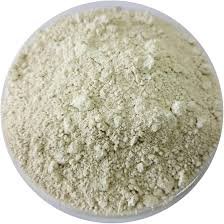
Kaolin clay is a naturally occurring clay mineral material widely used in ceramics, paper, paints, coatings, rubber, plastics, and other industrial applications. The principal mineral associated with kaolin is kaolinite, which has the chemical formula Al₂Si₂O₅(OH)₄.
But what exactly does this formula mean? Is kaolin the same as kaolinite? Does kaolin contain silica? And why can the chemical composition of commercial kaolin vary between grades?
In this guide, we explain the kaolin clay chemical formula, break down Al₂Si₂O₅(OH)₄, explain the chemical composition of kaolin, discuss silica and mineral content, and highlight the specifications industrial buyers should consider when selecting kaolin.
Quick Answer: What Is the Chemical Formula of Kaolin Clay?
The chemical formula of kaolinite, the principal clay mineral in kaolin, is:
Al₂Si₂O₅(OH)₄
It represents aluminium, silicon, oxygen and hydrogen arranged in the characteristic structure of the kaolinite mineral.
It is important to distinguish between kaolinite and kaolin clay. Kaolinite is a specific mineral with a defined chemical formula, while natural kaolin is a mineral material that may contain kaolinite along with other mineral components depending on its geological source, processing and grade.
Kaolin Clay at a Glance
| Property | Details |
|---|---|
| Principal mineral | Kaolinite |
| Kaolinite chemical formula | Al₂Si₂O₅(OH)₄ |
| Main elements | Aluminium, silicon, oxygen and hydrogen |
| Mineral type | Clay mineral |
| Common name | China clay |
| Common applications | Ceramics, paper, paints, coatings, rubber and plastics |
| Composition | Can vary according to source, processing and grade |
What Is the Chemical Formula of Kaolin Clay?
The commonly cited chemical formula associated with kaolin is Al₂Si₂O₅(OH)₄, which specifically represents kaolinite.
Kaolinite is the principal mineral responsible for many of the characteristic properties associated with kaolin clay. Its structure consists of aluminium, silicon, oxygen and hydroxyl groups arranged in a layered mineral structure.
For industrial buyers, however, the mineral formula should not be treated as a complete specification for every commercial kaolin product. Natural kaolin can contain other minerals or impurities, and its properties can change depending on the geological deposit, beneficiation and processing.
Therefore, when purchasing kaolin for manufacturing, the chemical formula provides the mineral identity, while product-specific technical specifications and test reports provide information about the actual material being supplied.
What Does Al₂Si₂O₅(OH)₄ Mean?
The formula Al₂Si₂O₅(OH)₄ can look complicated at first, but it becomes easier to understand when each part is broken down.
| Formula | Meaning |
|---|---|
| Al | Aluminium |
| Si | Silicon |
| O | Oxygen |
| OH | Hydroxyl group |
| Al₂ | Two aluminium atoms |
| Si₂ | Two silicon atoms |
| O₅ | Five oxygen atoms |
| (OH)₄ | Four hydroxyl groups |
The formula therefore describes the elements and their proportions within the kaolinite mineral structure.
Understanding this formula is useful when researching kaolin chemical composition, but it does not by itself describe every characteristic of a commercial kaolin grade.
What Is the Chemical Composition of Kaolin Clay?
The chemical composition of kaolin clay is primarily associated with the mineral kaolinite. Kaolinite contains aluminium, silicon, oxygen and hydrogen.
However, natural kaolin is not necessarily a laboratory-pure substance containing only kaolinite. Depending on the geological source and processing method, commercial kaolin may contain varying amounts of other mineral components.
Factors that can influence the composition and properties of a kaolin product include:
- Geological source
- Mineral content
- Processing and beneficiation
- Purity
- Particle size
- Moisture
- Whiteness or brightness
- Presence of other mineral phases
- Product grade and intended application
For this reason, buyers should review the technical specification and applicable laboratory test data for the specific kaolin grade they are considering.
What Elements Are Present in Kaolin?
The main elements represented in the kaolinite chemical formula are:
Aluminium
Aluminium is represented by Al in the formula. It forms an important part of the alumina-containing structure of kaolinite.
Silicon
Silicon is represented by Si. It forms part of the silicate structure of the kaolinite mineral.
Oxygen
Oxygen is represented by O and occurs throughout the mineral structure.
Hydrogen
Hydrogen occurs within the hydroxyl (OH) groups represented in the formula.
Together, these elements form the characteristic structure of kaolinite.
Natural kaolin deposits may also contain other mineral components, which is why the exact chemical composition of commercial kaolin can differ between sources and grades.
Is Kaolin the Same as Kaolinite?
No. Kaolin and kaolinite are related but are not exactly the same thing.
Kaolinite is a specific clay mineral with the chemical formula Al₂Si₂O₅(OH)₄.
Kaolin clay, also called china clay, is a natural mineral material primarily associated with kaolinite. Depending on its source and processing, it may contain other mineral components.
A simple way to remember the difference is:
Kaolinite is a specific mineral; kaolin is the natural clay material primarily composed of kaolinite.
This distinction is important when evaluating kaolin for industrial applications because the formula of kaolinite does not necessarily describe the complete composition of a commercial kaolin product.
Does Kaolin Clay Contain Silica?
Yes. Kaolinite contains silicon and oxygen as part of its mineral structure.
The silicon represented by Si in Al₂Si₂O₅(OH)₄ is part of the silicate structure of kaolinite.
However, it is important to distinguish between silicon within the kaolinite mineral structure and free crystalline silica or other separate silica-bearing mineral phases that may be present in a natural mineral product.
The presence and amount of specific mineral components should therefore be determined from the relevant product specification or laboratory analysis rather than assumed solely from the kaolinite formula.
For industrial buyers, this distinction can be important when evaluating a material for a specific manufacturing process or technical requirement.
Why Can Kaolin Chemical Composition Vary?
Natural kaolin deposits are formed under different geological conditions. As a result, the mineral composition and physical characteristics of kaolin can vary from one deposit to another.
Processing can also affect the final characteristics of a commercial product.
Some factors that can contribute to differences between kaolin grades include:
- Source of the mineral
- Degree of beneficiation
- Mineral purity
- Particle size distribution
- Moisture content
- Whiteness or brightness
- Mineral impurities
- Processing conditions
- Intended application
This is why two kaolin products can have the same principal mineral but still perform differently in a manufacturing process.
Why Does Chemical Composition Matter When Buying Kaolin?
Understanding kaolin chemical composition can help manufacturers select a material that is better suited to their processing requirements.
However, chemical composition is only one part of the selection process.
Depending on the application, buyers may also need to consider:
- Purity
- Particle size
- Whiteness or brightness
- Moisture
- Mineral impurities
- Bulk density
- Processing characteristics
- Technical specifications
- Consistency between batches
- Required quantity
- Application-specific performance requirements
For high-volume manufacturing, consistent raw material characteristics can be particularly important because changes between batches may affect processing and final product performance.
Kaolin for Industrial Applications
Kaolin is used across a wide range of manufacturing industries because of its mineral characteristics and versatility.
Kaolin for Ceramics
Kaolin is commonly used in ceramic formulations. Its mineral characteristics, particle size and purity can influence processing and firing behavior.
Manufacturers should select a grade according to the requirements of their specific ceramic formulation.
Kaolin for Paper
Kaolin can be used in paper manufacturing as a coating and filler material.
Properties such as particle size, brightness, purity and mineral characteristics can be important when selecting kaolin for paper-related applications.
Kaolin for Paints and Coatings
Kaolin can be incorporated into paint and coating formulations where its particle characteristics and mineral properties may contribute to formulation performance.
The appropriate grade depends on the formulation and desired technical characteristics.
Kaolin for Rubber
Kaolin can be used as a mineral filler in certain rubber applications.
Particle size, surface characteristics, purity and compatibility with the formulation can influence its suitability.
Kaolin for Plastics
Kaolin may also be used in selected plastic formulations as a mineral filler or functional additive.
As with other applications, manufacturers should evaluate the grade according to the required specifications and processing conditions.
How to Choose the Right Kaolin Grade
Choosing kaolin based only on its chemical formula is not enough.
For industrial applications, consider the following factors:
1. Purity
Check the purity requirements of your application and compare them with the supplier's technical specifications.
2. Particle Size
Particle size can affect dispersion, processing behavior and final product characteristics.
3. Whiteness or Brightness
Whiteness can be particularly important in applications such as paper, coatings, ceramics and other products where appearance matters.
4. Moisture
Moisture content can influence handling, storage and formulation.
5. Chemical Composition
Review the chemical composition and relevant mineral information for the specific grade rather than relying only on the general kaolinite formula.
6. Mineral Impurities
The presence of other mineral components can affect the suitability of kaolin for certain applications.
7. Application Requirements
The ideal kaolin grade depends on how the material will be used. A grade suitable for one industrial process may not be appropriate for another.
8. Technical Documentation
Where required, request the relevant technical specifications, laboratory analysis or Certificate of Analysis (COA) for the product.
Kaolin vs Kaolinite: What's the Difference?
| Feature | Kaolin Clay | Kaolinite |
|---|---|---|
| Definition | Natural clay/mineral material | Specific clay mineral |
| Principal mineral | Primarily kaolinite | Kaolinite |
| Chemical formula | Depends on the overall mineral composition | Al₂Si₂O₅(OH)₄ |
| Natural variation | May vary by source and processing | Defined mineral composition |
| Other mineral components | May be present | Refers specifically to kaolinite |
| Industrial relevance | Used as a raw material in many industries | Principal mineral associated with kaolin |
The key takeaway is that Al₂Si₂O₅(OH)₄ is the chemical formula of kaolinite, not a complete chemical specification for every commercial kaolin product.
Is Kaolin a Chemical Compound or a Mineral?
Kaolin is best understood as a naturally occurring mineral material, rather than simply treating every commercial kaolin product as a single pure chemical compound.
Its principal mineral is kaolinite, which has the defined formula Al₂Si₂O₅(OH)₄.
Natural kaolin may contain other mineral components depending on its geological source and processing. Therefore, the exact composition of a commercial product should be evaluated using product-specific technical information.
Is Kaolin Suitable for Cosmetic Applications?
The kaolinite chemical formula alone does not establish whether a particular kaolin product is suitable for cosmetic use.
Cosmetic applications may require specific standards relating to:
- Purity
- Heavy metals or other contaminants
- Microbiological requirements
- Particle characteristics
- Testing
- Manufacturing controls
- Applicable cosmetic regulations
Therefore, cosmetic suitability should always be determined from the specifications and compliance documentation of the specific product.
Industrial-grade kaolin should not automatically be assumed to be suitable for cosmetic formulations.
Why Product-Specific Testing Matters?
The general kaolinite formula explains the identity and structure of the principal mineral, but industrial buyers need more information when evaluating a raw material.
Depending on the application, relevant product data may include:
- Chemical composition
- Purity
- Particle size
- Moisture
- Whiteness or brightness
- Mineralogical information
- Physical properties
- Application-specific test results
Using product-specific technical information helps manufacturers select a grade that matches their formulation and production requirements.
Conclusion
The chemical formula of kaolinite is Al₂Si₂O₅(OH)₄, representing aluminium, silicon, oxygen and hydrogen within the characteristic structure of the mineral.
The important distinction is that kaolinite and kaolin are not exactly the same. Kaolinite is a specific clay mineral, while natural kaolin is a mineral material primarily associated with kaolinite and may contain other mineral components depending on its source and processing.
For industrial applications, the formula is only the starting point. Purity, particle size, whiteness, moisture, mineral composition, technical specifications and application requirements should also be considered when selecting a kaolin grade.
Whether you need kaolin for ceramics, paper, paints and coatings, rubber, plastics or another industrial application, reviewing the technical specifications of the specific grade can help you make a more informed purchasing decision.
Looking for Kaolin for Industrial Applications?
Green Trade India supplies kaolin for industrial requirements and can help buyers evaluate suitable grades based on their application, specifications and quantity requirements.
Looking for the right kaolin grade? Contact Green Trade India to discuss your requirements and request product specifications or a quotation.
Our Popular Categories
Kaolin Clay | Kaolin Powder | Kaolin Noodles | Kaolin Granules
Frequently Asked Questions About Kaolin Chemical Formula
1. What is the chemical formula of kaolin clay?
The chemical formula commonly associated with kaolin is Al₂Si₂O₅(OH)₄, which specifically represents kaolinite, the principal mineral in kaolin clay.
2. What is the chemical formula of kaolinite?
The chemical formula of kaolinite is Al₂Si₂O₅(OH)₄.
3. What does Al₂Si₂O₅(OH)₄ represent?
Al₂Si₂O₅(OH)₄ represents the elemental composition and mineral structure of kaolinite. It contains aluminium, silicon, oxygen and hydrogen in the characteristic structure of this clay mineral.
4. What elements are present in kaolin clay?
The kaolinite mineral contains aluminium, silicon, oxygen and hydrogen. Natural kaolin may also contain other mineral components depending on its source and grade.
5. Is kaolin the same as kaolinite?
No. Kaolinite is a specific clay mineral, while kaolin is a natural clay material primarily associated with kaolinite and may contain other mineral components.
6. Does kaolin clay contain silica?
Kaolinite contains silicon and oxygen within its silicate mineral structure. However, the presence and quantity of free silica or other separate silica-bearing minerals should be determined from product-specific laboratory data.
7. What is kaolin clay made of?
Kaolin clay is primarily associated with the mineral kaolinite. Kaolinite contains aluminium, silicon, oxygen and hydrogen, while natural kaolin can contain additional mineral components depending on its geological source and processing.
8. Why does the chemical composition of kaolin vary?
Natural kaolin composition can vary because of differences in geological deposits, mineral impurities, beneficiation and processing methods. Different commercial grades may therefore have different specifications.
9. What is kaolin clay used for?
Kaolin is used in industries including ceramics, paper, paints, coatings, rubber and plastics. The appropriate grade depends on the technical requirements of the application.
10. Is kaolin safe for cosmetic use?
The kaolinite formula alone cannot determine cosmetic safety. A specific kaolin product should meet the required purity, contaminant, testing and regulatory requirements for cosmetic use.
11. What should I check before buying industrial kaolin?
Buyers should consider purity, particle size, moisture, whiteness, chemical composition, mineral impurities, technical specifications and the intended application. Product-specific laboratory data or a Certificate of Analysis may also be important.