


Choosing a kaolin clay supplier is more than comparing the lowest price per kilogram. For B2B manufacturers, differences in purity, particle size, brightness, moisture, grade, and batch consistency can directly affect production performance and finished-product quality.
Before placing a bulk order, buyers should evaluate a supplier's product specifications, quality-control process, Certificate of Analysis (COA), production capacity, packaging, delivery reliability, technical support and application knowledge.
This guide provides a practical kaolin clay supplier checklist to help manufacturers compare suppliers, identify potential red flags and make a more informed bulk purchasing decision.
Quick Answer: How Do You Choose a Reliable Kaolin Clay Supplier?
A reliable kaolin clay supplier should be able to demonstrate:
- Consistent product specifications
- Suitable grades for your application
- Batch-level quality testing
- A clear Certificate of Analysis (COA)
- Appropriate technical specifications
- Reliable production capacity
- Suitable packaging options
- Consistent delivery timelines
- Industry and application knowledge
- Competitive total cost, not simply the lowest price
Before committing to a long-term supply arrangement, request product samples, review the technical documentation and test the material against your production requirements.
Kaolin Clay Supplier Checklist: 10 Things to Check
1. Define Your Kaolin Clay Specifications First
Before contacting suppliers, determine exactly what your manufacturing process requires.
Depending on the application, important specifications may include:
- Purity and mineral composition
- Particle size or particle-size distribution
- Brightness or whiteness
- Moisture content
- Form of material
- Grade
- Chemical composition
- Impurity levels
- Dispersion or processing characteristics
- Application-specific performance requirements
The required specifications can vary considerably between industries. A kaolin grade suitable for one manufacturing process may not be appropriate for another.
Having a clear specification sheet makes it easier to compare suppliers on an equivalent basis instead of comparing quotations based only on price.
2. Check Whether the Kaolin Grade Is Suitable for Your Application
Kaolin clay is used across several industries, including:
- Ceramics
- Paper
- Paints and coatings
- Rubber
- Plastics
- Refractories
- Construction
- Other industrial applications
Each application may require different material characteristics.
For example, a buyer sourcing kaolin for ceramics may have different requirements from a paper or coatings manufacturer. Therefore, don't simply ask, "What is your price for kaolin?"
Ask:
"Which kaolin grade and specifications are suitable for my application?"
A knowledgeable supplier should be able to explain the available grades and provide technical information that helps you evaluate application suitability.
3. Verify Product Quality and Batch-to-Batch Consistency
A product sample may perform well during testing, but B2B buyers also need confidence that future batches will meet the same specifications.
Sample approval does not automatically mean production consistency.
Ask the supplier:
- How is batch consistency controlled?
- Are products tested before dispatch?
- Are specifications documented?
- Are batch numbers traceable?
- How are variations handled?
- Can the supplier maintain the same specification for repeat orders?
Inconsistent raw materials can affect production efficiency, product quality, wastage and manufacturing costs.
For manufacturers purchasing kaolin clay regularly, consistency can therefore be just as important as the initial purchase price.
4. Request and Review a Certificate of Analysis (COA)
A Certificate of Analysis (COA) provides test information for a specific material or batch and helps buyers compare supplied material against agreed specifications.
When evaluating a kaolin clay supplier, ask whether a batch-specific COA is available and which parameters are tested.
Depending on the application, buyers may need information relating to:
- Chemical composition
- Purity
- Particle size
- Moisture
- Brightness or whiteness
- Relevant physical properties
- Other application-specific parameters
A COA should not simply be treated as a quality document that exists for compliance purposes. Buyers should compare the reported results with their own purchasing specifications.
Why Is a COA Important When Buying Kaolin Clay in Bulk?
A COA gives buyers documented information about tested product characteristics before accepting larger quantities. This can help reduce uncertainty when moving from sample testing to regular or bulk procurement.
5. Check Certifications and Quality-Control Procedures
Certifications can provide useful information about a supplier's quality-management practices, but buyers should consider the certifications and documentation relevant to their specific application and destination market.
Ask the supplier about:
- Quality-management systems
- Laboratory testing
- Product specifications
- Batch testing procedures
- Traceability
- Relevant compliance documentation
- Export documentation, where applicable
Don't evaluate a supplier based solely on the number of certificates displayed on its website. The more important question is whether the supplier has a reliable process for consistently producing and testing material against agreed specifications.
6. Evaluate Production Capacity and Supply Reliability
A supplier may be able to fulfill a small order but struggle to support larger or recurring requirements.
Before entering a long-term agreement, ask:
- What is the supplier's production capacity?
- What is the minimum order quantity?
- What is the standard lead time?
- Can monthly or recurring orders be supported?
- Can supply volumes increase as your business grows?
- What happens during periods of increased demand?
- Are domestic and export orders supported?
For manufacturers, supply interruptions can affect production schedules and customer commitments.
A reliable bulk kaolin clay supplier should therefore be evaluated not only on today's order but also on its ability to support your future requirements.
7. Compare Packaging and Logistics Options
Packaging can influence handling, storage, transportation and overall procurement costs.
Depending on your requirements, ask whether the supplier provides:
- 25 kg bags
- 50 kg bags
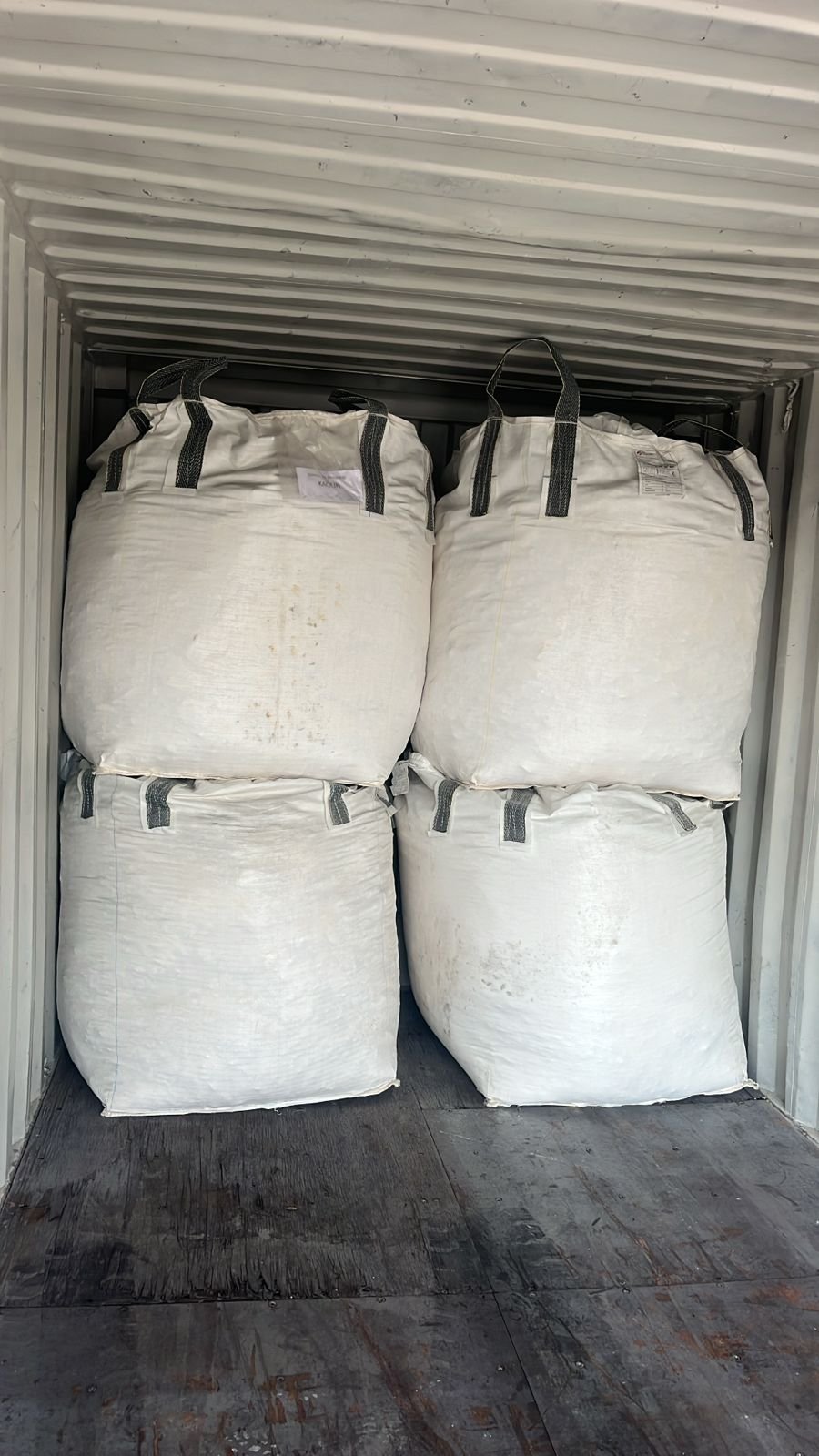
- Jumbo bags
- Customized packaging
- Palletized shipments
- Export-ready packaging
Also confirm:
- Dispatch timelines
- Shipping arrangements
- Loading procedures
- Documentation
- Export requirements
- Delivery terms
A competitive material price can lose its advantage if packaging, freight or handling costs are significantly higher.
8. Evaluate the Supplier's Industry and Application Knowledge
Kaolin clay is a versatile industrial mineral, but selecting the right material requires understanding how its characteristics interact with a particular manufacturing process.
A supplier serving industrial customers should be able to discuss relevant requirements for applications such as:
Ceramics: particle size, plasticity, impurities and firing-related requirements.
Paper: brightness, particle size and application-specific coating characteristics.
Paints and coatings: particle size, dispersion, brightness and formulation requirements.
Rubber and plastics: particle characteristics, moisture, dispersion and compatibility with the manufacturing process.
Refractories: chemical composition, impurities and thermal requirements.
The right supplier should do more than provide a price per kilogram. It should be able to understand your application and help you identify an appropriate product specification.
9. Compare Total Cost, Not Just the Lowest Price
Price is naturally an important factor in B2B procurement. However, choosing the cheapest kaolin clay supplier may not always result in the lowest overall manufacturing cost.
Consider the potential impact of:
- Product inconsistency
- Production wastage
- Rejected batches
- Additional testing
- Processing adjustments
- Transportation
- Packaging
- Storage
- Production downtime
- Delivery delays
A useful way to think about supplier economics is:
Total Cost = Material Price + Freight + Packaging + Handling + Testing + Wastage + Production Impact
A supplier offering slightly higher-priced material may provide better overall value if the material is consistent, suitable for your application and reliably delivered.
10. Request a Sample and Conduct a Trial Order
Before committing to a large or recurring purchase, request a sample whenever possible.
A practical B2B sourcing process can look like this:
Supplier Shortlist → Technical Specification → Sample → Laboratory/Production Testing → COA Review → Trial Order → Performance Evaluation → Bulk Order
During the trial, evaluate:
- Product consistency
- Processing behavior
- Finished-product performance
- Packaging condition
- Delivery reliability
- Documentation
- Supplier responsiveness
If the material meets your requirements, you can then move toward regular purchasing with greater confidence.
How to Compare Kaolin Clay Suppliers
Instead of comparing suppliers solely on their quotations, create a supplier evaluation scorecard.
| Evaluation Factor | What to Check |
|---|---|
| Product quality | Does the material meet your technical specifications? |
| Grade suitability | Is the grade appropriate for your application? |
| Batch consistency | Can the supplier maintain consistent specifications? |
| COA/testing | Is batch-level testing available? |
| Production capacity | Can the supplier support your required volume? |
| Delivery | Are lead times reliable? |
| Packaging | Does the supplier offer suitable packaging? |
| Technical support | Can the supplier discuss application requirements? |
| Export support | Can required documentation be provided? |
| Total cost | What is the actual landed/manufacturing cost? |
You can assign your own weight to each factor based on how important it is to your business.
7 Red Flags to Watch for When Choosing a Kaolin Clay Supplier
Not every supplier offering a competitive quotation is necessarily suitable for long-term B2B sourcing.
Watch for these warning signs:
1. No clear technical specifications
If a supplier cannot provide clear information about its product, comparing it with other suppliers becomes difficult.
2. No batch-level testing
If the supplier cannot explain how product quality is tested and controlled, ask additional questions before placing a large order.
3. Sample quality differs from production material
A sample should represent the material you will actually receive. Significant variation can create manufacturing problems.
4. Supplier focuses only on price
A supplier that cannot discuss quality, consistency, application suitability or delivery may not be the right long-term partner.
5. Unclear lead times
Uncertain delivery schedules can create problems for manufacturers operating continuous production.
6. No clear packaging options
Packaging should be suitable for transportation, storage and your handling requirements.
7. Limited understanding of your application
A supplier should be able to discuss the relevant properties and requirements for your intended use.
12 Questions to Ask a Kaolin Clay Supplier Before Ordering
Before placing a bulk order, ask:
- What kaolin grade is recommended for my application?
- What product specifications can you consistently maintain?
- What purity or mineral composition does the material have?
- What particle-size ranges are available?
- What is the typical moisture level?
- What brightness or whiteness specifications are available?
- Can you provide a batch-specific COA?
- Can I receive a sample before placing a bulk order?
- What is the minimum order quantity?
- What packaging options are available?
- What is the standard production and delivery lead time?
- Can you support recurring domestic or export orders?
The answers to these questions can help you compare suppliers on factors that matter beyond price.
Kaolin Clay Requirements by Industry
Different industries can have different priorities when selecting kaolin.
| Industry | Important Considerations |
|---|---|
| Ceramics | Particle size, plasticity, impurities and firing characteristics |
| Paper | Brightness, particle size, opacity and application performance |
| Paints & coatings | Particle size, brightness, dispersion and formulation compatibility |
| Rubber | Particle characteristics, moisture and processing compatibility |
| Plastics | Particle size, moisture, dispersion and formulation requirements |
| Refractories | Chemical composition, impurities and thermal requirements |
| Construction | Particle size, moisture and formulation compatibility |
These are general considerations. The actual specifications should be determined according to your manufacturing process and finished-product requirements.
Why Choose Green Trade India for Kaolin Clay?
Green Trade India supplies kaolin clay to industrial customers for applications including ceramics, paper, paints and coatings, rubber, plastics, refractories, construction and other manufacturing requirements.
The company supplies kaolin in powder, noodle and lump forms, with packaging options including 25 kg bags, 50 kg bags and jumbo bags, as well as customized packaging requirements where applicable.
For businesses purchasing kaolin clay in bulk, product selection can be discussed according to the required application, specifications, quantity, packaging and domestic or export requirements.
Rather than selecting a supplier based only on the lowest quotation, buyers can evaluate the material based on quality, consistency, documentation, supply capability, packaging, application suitability and overall value.
Key Takeaways
Choosing a reliable kaolin clay supplier requires more than comparing prices.
Before placing a bulk order, B2B buyers should:
- Define their technical specifications
- Select the appropriate grade for the application
- Verify product quality and batch consistency
- Request and review a COA
- Understand the supplier's quality-control procedures
- Check production and supply capacity
- Compare packaging and logistics
- Evaluate technical and application knowledge
- Calculate total procurement cost
- Test samples and conduct a trial order
The best supplier is not necessarily the one offering the lowest price. It is the supplier that can consistently provide suitable material at the required specification, quantity, quality and delivery schedule.
Our Popular Categories
Kaolin Clay | Kaolin Powder | Kaolin Noodles | Kaolin Granules
Frequently Asked Questions About Kaolin Clay Suppliers
1. How do I choose a reliable kaolin clay supplier?
Look for a supplier that can demonstrate consistent product quality, provide suitable technical specifications and testing documentation, maintain dependable production capacity and understand your industry's requirements. Requesting samples and conducting a trial order can also help verify suitability before committing to recurring purchases.
2. What should B2B buyers look for in a kaolin clay supplier?
B2B buyers should evaluate product grade, purity, particle size, brightness, moisture, batch consistency, COA availability, testing procedures, production capacity, packaging, delivery reliability, technical support and total cost.
3. What specifications should I check when buying kaolin clay?
The specifications depend on the application, but buyers may need to evaluate purity or mineral composition, particle size, brightness or whiteness, moisture, impurities and other application-specific properties.
4. Why is batch consistency important when sourcing kaolin clay?
Consistent raw materials can help manufacturers maintain stable production processes and finished-product quality. Significant variations between batches may increase wastage, processing adjustments or product rejection.
5. What is a Certificate of Analysis (COA) for kaolin clay?
A Certificate of Analysis provides documented test results for relevant product parameters. It helps buyers compare the supplied material against their agreed technical specifications.
6. Should I request a sample before buying kaolin clay in bulk?
Yes. A sample allows buyers to evaluate the material against their own laboratory or production requirements before committing to a larger order.
7. Should I choose a kaolin clay supplier based only on price?
No. The lowest material price does not necessarily represent the lowest total cost. Buyers should also consider consistency, testing, freight, packaging, wastage, delivery reliability and production performance.
8. What industries use kaolin clay?
Kaolin clay is used in ceramics, paper, paints and coatings, rubber, plastics, refractories, construction and other industrial applications. The required grade and specifications can vary by application.
9. Can kaolin clay specifications or packaging be customized?
Some suppliers offer customized product specifications, material forms or packaging depending on their production capabilities. Buyers should discuss their technical and commercial requirements with the supplier before ordering.
10. What questions should I ask a kaolin clay supplier before placing a bulk order?
Ask about the recommended grade, product specifications, particle size, purity, moisture, brightness, COA, testing procedures, sample availability, MOQ, packaging, lead time, production capacity and export documentation where required.