


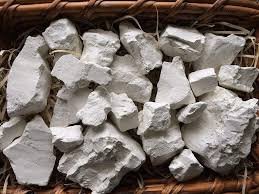
Hydrous kaolin and calcined kaolin are two widely used forms of kaolin clay, but they are not interchangeable in every industrial formulation. The key difference is processing: hydrous kaolin retains chemically bound water in its mineral structure, while calcined kaolin is heat-treated to remove that water and modify its structure and performance characteristics.
These differences can affect brightness, opacity, oil absorption, particle characteristics, surface finish and formulation performance.
So, which is better: hydrous kaolin or calcined kaolin?
There is no universal answer. The right kaolin grade depends on the application, formulation, desired finish, opacity, PVC, binder system, particle size and other technical requirements.
Quick Answer: Hydrous Kaolin vs Calcined Kaolin
Hydrous kaolin is commonly selected as a cost-effective functional filler and extender for applications such as paints, coatings, paper, plastics, rubber and ceramics.
Calcined kaolin is produced by heating kaolin to remove chemically bound water. This changes the mineral structure and can provide enhanced opacity, brightness and oil absorption in suitable grades. Calcined grades are particularly useful in applications where higher opacity, dry hiding, low sheen or other specialized performance characteristics are required.
For paint and coating formulations, hydrous kaolin can be suitable for gloss and semi-gloss systems, while calcined kaolin is often considered for matte and higher-PVC coatings where opacity and dry hiding are important.
Hydrous Kaolin vs Calcined Kaolin: At a Glance
| Property | Hydrous Kaolin | Calcined Kaolin |
|---|---|---|
| Manufacturing process | Beneficiated, purified and milled | Heat-treated/calcined |
| Chemically bound water | Retained | Removed during calcination |
| Mineral structure | Hydrated kaolinite structure | Modified through calcination |
| Brightness | High in suitable grades | Often enhanced in suitable grades |
| Opacity | Good | Generally higher in appropriate grades |
| Oil absorption | Grade-dependent | Often higher |
| Paint applications | Filler and extender; suitable for various finishes | Opacity, dry hiding and matte/low-sheen applications |
| Typical positioning | General-purpose and cost-effective | Higher-performance/specialized applications |
| Other uses | Paper, plastics, rubber, ceramics and coatings | Coatings, plastics, rubber, ceramics and specialty applications |
Actual performance varies by kaolin grade, particle-size distribution, processing method and formulation.
What Is Hydrous Kaolin?
Hydrous kaolin is a naturally occurring clay mineral primarily composed of kaolinite. Unlike calcined kaolin, it has not undergone high-temperature calcination to remove chemically bound water.
After beneficiation, purification and milling, hydrous kaolin can be processed into grades with controlled brightness, particle size, purity and other characteristics for industrial applications.
Hydrous kaolin is widely used as a functional filler or extender in:
- Paints and coatings
- Paper and paper coatings
- Plastics
- Rubber
- Ceramics
- Construction-related formulations
- Other industrial products
Its combination of fine particle characteristics, brightness and cost-effectiveness makes it useful across a wide range of formulations.
What Is Calcined Kaolin?
Calcined kaolin is produced by heating kaolin at a controlled temperature to remove chemically bound water from the mineral structure.
This thermal treatment changes the physical and structural characteristics of kaolin. Depending on the grade and calcination process, calcined kaolin can provide properties such as:
- High brightness
- Enhanced opacity
- Increased oil absorption
- Modified particle structure
- Improved dry hiding
- Reduced hydrophilic character compared with untreated hydrous kaolin
Because of these characteristics, calcined kaolin is frequently selected for higher-performance paint, coating, plastic, rubber, ceramic and other industrial applications.
How Does Calcination Change Kaolin?
The main difference between hydrous and calcined kaolin begins with the manufacturing process.
Hydrous kaolin retains its hydrated mineral structure. Calcination removes chemically bound water and changes the structure of the particles.
For coatings, this structural change can create conditions that improve light scattering and dry hiding. Calcined kaolin can therefore be particularly useful in matte and higher-PVC coatings where opacity and reduced sheen are important.
Technical coating literature also identifies calcined kaolin as useful for improving opacity and extending titanium dioxide in appropriate formulations.
Hydrous Kaolin vs Calcined Kaolin: Key Differences
1. Processing
Hydrous kaolin undergoes beneficiation, purification and milling, whereas calcined kaolin undergoes an additional high-temperature calcination process.
2. Mineral Structure
Hydrous kaolin retains chemically bound water. Calcination removes this water and modifies the mineral structure.
3. Opacity
Both grades can contribute to opacity, but calcined kaolin is often selected when enhanced opacity and dry hiding are important.
4. Brightness
Both hydrous and calcined grades can offer high brightness. The actual brightness depends on the mineral source, beneficiation process and grade specification.
5. Oil Absorption
Calcined kaolin generally has higher oil absorption in appropriate grades, which can influence formulation design and coating performance.
6. Surface Finish
Hydrous kaolin can be useful in gloss and semi-gloss formulations, while calcined kaolin is frequently considered for matte and low-sheen coatings.
7. Cost and Formulation Requirements
Hydrous kaolin may provide an economical solution for general-purpose filler and extender applications. Calcined kaolin can be more appropriate when the formulation requires enhanced optical or performance properties.
Hydrous Kaolin vs Calcined Kaolin for Paints & Coatings
Paint and coating manufacturers often choose between hydrous and calcined kaolin based on the required opacity, gloss, sheen, PVC, hiding power and overall formulation cost.
Hydrous Kaolin for Paint
Hydrous kaolin can be used as a functional filler and extender in different paint systems.
Potential formulation benefits include:
- Filler and extender functionality
- Good brightness
- Particle-size control
- Cost-effective formulation support
- Suitable performance in various coating systems
- Compatibility with different formulation requirements
Hydrous grades may be particularly suitable when the formulation requires a balance between performance, appearance and cost.
Calcined Kaolin for Paint
Calcined kaolin can be selected when greater emphasis is placed on optical performance and opacity.
Depending on the grade, it can contribute to:
- Higher opacity
- Improved dry hiding
- Brightness
- Matte or low-sheen appearance
- Higher oil absorption
- Titanium dioxide extension in suitable formulations
Calcined kaolin is particularly relevant for medium- to high-PVC coating systems where dry hiding and reduced sheen are important.
Which Kaolin Is Better for Matte Paint?
Calcined kaolin is often preferred for matte and flat paint formulations, particularly when opacity, dry hiding and low sheen are important.
Its modified particle structure can contribute to light scattering within the dry coating film, helping formulate coatings with high opacity and lower sheen.
However, the best grade should always be evaluated against the complete formulation rather than selected solely on the basis of whether it is hydrous or calcined.
Which Kaolin Is Better for Gloss and Semi-Gloss Paint?
Hydrous kaolin can be a suitable choice for gloss and semi-gloss coating systems, particularly where maintaining gloss while providing filler/extender functionality is important.
The final result depends on particle size, binder system, PVC, pigment concentration and other formulation variables.
Can Kaolin Be Used as a Titanium Dioxide Extender?
Yes. Selected kaolin grades can be used as functional extenders alongside titanium dioxide in paint and coating formulations.
Titanium dioxide provides strong light scattering and opacity, while suitable kaolin grades can help optimize the formulation and extend TiO₂ usage.
Calcined kaolin can be particularly useful in matte and higher-PVC systems where additional dry hiding and opacity are desired.
The correct addition level should be determined through formulation trials because excessive replacement can affect opacity, gloss, viscosity and other coating properties.
Where Is Hydrous Kaolin Used?
Hydrous kaolin is used across numerous industrial sectors.
Paints and Coatings
Used as a filler and extender where brightness, particle characteristics and formulation economics are important.
Paper
Kaolin is used as a filler and coating pigment to support brightness, opacity, smoothness and printability.
Plastics
Selected grades can be incorporated as mineral fillers to modify formulation and performance characteristics.
Rubber
Kaolin can be used as a mineral filler in selected rubber formulations.
Ceramics
Hydrous kaolin contributes to plasticity and processing characteristics in ceramic formulations.
The broad industrial use of kaolin reflects its role across paper, ceramics, paints and coatings, plastics, rubber and other sectors.
Where Is Calcined Kaolin Used?
Calcined kaolin is used where its modified properties provide a formulation advantage.
Common applications include:
- Paints and coatings
- Matte and flat coatings
- Plastics
- Rubber
- Ceramics
- Paper and specialty paper applications
- Other high-performance industrial formulations
Its enhanced optical and physical characteristics can make it suitable for applications requiring higher opacity, brightness or specialized performance.
Hydrous vs Calcined Kaolin for Plastics
Both hydrous and calcined kaolin can be used in selected plastic formulations.
The appropriate grade depends on factors such as:
- Polymer type
- Filler loading
- Particle size
- Surface treatment
- Dispersion requirements
- Mechanical performance
- Dimensional stability
- Surface appearance
Calcined grades may be considered where higher-performance characteristics are required, while hydrous grades can provide an economical mineral filler option.
Hydrous vs Calcined Kaolin for Rubber
Kaolin can function as a mineral filler in selected rubber compounds.
The choice between hydrous and calcined kaolin should consider:
- Compound formulation
- Filler loading
- Particle size
- Dispersion
- Mechanical properties
- Abrasion requirements
- Processing conditions
There is no single kaolin grade that is ideal for every rubber formulation.
Hydrous vs Calcined Kaolin for Ceramics
The choice becomes especially important in ceramic formulations because processing and firing behavior matter.
Hydrous kaolin can contribute to plasticity and shaping characteristics, while calcined kaolin has already undergone thermal treatment and can be useful where dimensional stability and specific fired properties are important.
The best selection depends on the ceramic body, glaze, firing temperature and required final properties.
Hydrous vs Calcined Kaolin for Paper
Kaolin is an important mineral in paper filling and coating applications.
It can contribute to:
- Brightness
- Opacity
- Smoothness
- Printability
- Surface characteristics
Both hydrous and calcined grades can be used, depending on the paper grade and required performance.
How to Choose the Right Kaolin Grade
Choosing hydrous or calcined kaolin should begin with the end-use requirement, not simply the product name.
Consider these factors:
1. Application
Determine whether the kaolin will be used in paint, coating, paper, plastic, rubber, ceramic or another application.
2. Required Brightness
If brightness and whiteness are critical, compare grades using the supplier's technical specifications.
3. Opacity and Hiding
For applications requiring high opacity or dry hiding, calcined grades may provide an advantage.
4. Gloss and Surface Finish
Consider whether the finished product requires a gloss, semi-gloss, eggshell, matte or flat appearance.
5. Particle Size
Particle-size distribution can significantly affect dispersion, opacity, gloss, rheology and other formulation characteristics.
6. Oil Absorption
Oil absorption is particularly important in paint and coating formulations and should be matched to the formulation requirements.
7. PVC and Binder System
For coatings, the choice should be evaluated alongside pigment volume concentration, binder type, TiO₂ loading and other formulation variables.
8. Processing Conditions
Manufacturing temperature, dispersion equipment, mixing conditions and firing conditions can influence the performance of the selected grade.
9. Cost vs Performance
A lower-cost hydrous grade may be sufficient for a general-purpose application, while a calcined grade may justify its higher processing cost when enhanced performance is required.
Hydrous Kaolin or Calcined Kaolin: Which Should You Choose?
Choose hydrous kaolin when you need a versatile, cost-effective filler or extender for applications such as paints, coatings, paper, plastics, rubber or ceramics.
Consider calcined kaolin when the formulation requires enhanced opacity, brightness, oil absorption, dry hiding, matte finish or other specialized performance characteristics.
The correct choice ultimately depends on the grade specification and formulation, rather than the product category alone.
Why Work with Green Trade India?
Selecting the right kaolin grade can be challenging because two products described as "kaolin" can behave differently in the same formulation.
Green Trade India helps industrial buyers evaluate kaolin based on their:
- End-use application
- Required brightness
- Particle size
- Opacity
- Oil absorption
- Surface finish
- Formulation requirements
- Processing conditions
- Performance targets
Whether you are sourcing hydrous kaolin powder or calcined kaolin, selecting the right specification can help improve formulation consistency and product performance.
Conclusion
Hydrous and calcined kaolin are both valuable industrial minerals, but their different processing methods give them different performance characteristics.
Hydrous kaolin is widely used as a functional filler and extender because of its versatility, brightness and cost-effectiveness.
Calcined kaolin undergoes thermal treatment that modifies its mineral structure and can provide enhanced opacity, brightness, oil absorption and dry-hiding characteristics in suitable grades.
For paints and coatings, hydrous kaolin can be suitable for many gloss and semi-gloss systems, while calcined kaolin is often considered for matte, flat and higher-PVC formulations where opacity and dry hiding are important.
The best kaolin is not necessarily hydrous or calcined—it is the grade that matches your formulation and performance requirements.
FAQs
1. What is the difference between hydrous kaolin and calcined kaolin?
Hydrous kaolin retains its hydrated mineral structure, while calcined kaolin is heat-treated to remove chemically bound water and alter its structure and performance properties.
2. Which is better, hydrous kaolin or calcined kaolin?
Neither is universally better. Hydrous and calcined grades have different properties, so the appropriate choice depends on the application, formulation and required performance.
3. What is hydrous kaolin used for?
Hydrous kaolin is used as a functional filler and extender in paints, coatings, paper, plastics, rubber, ceramics and other industrial products.
4. What is calcined kaolin used for?
Calcined kaolin is used in paints, coatings, plastics, rubber, ceramics and other applications where properties such as opacity, brightness and oil absorption are important.
5. Is calcined kaolin better for paints than hydrous kaolin?
Calcined kaolin can provide higher opacity and specific coating benefits in some formulations, but hydrous kaolin can also perform well depending on the paint system and desired properties.
6. Which kaolin is better for matte paint: hydrous or calcined?
Calcined kaolin is often considered for matte paints because of its optical and particle characteristics, but the best choice depends on the complete formulation and desired surface finish.