


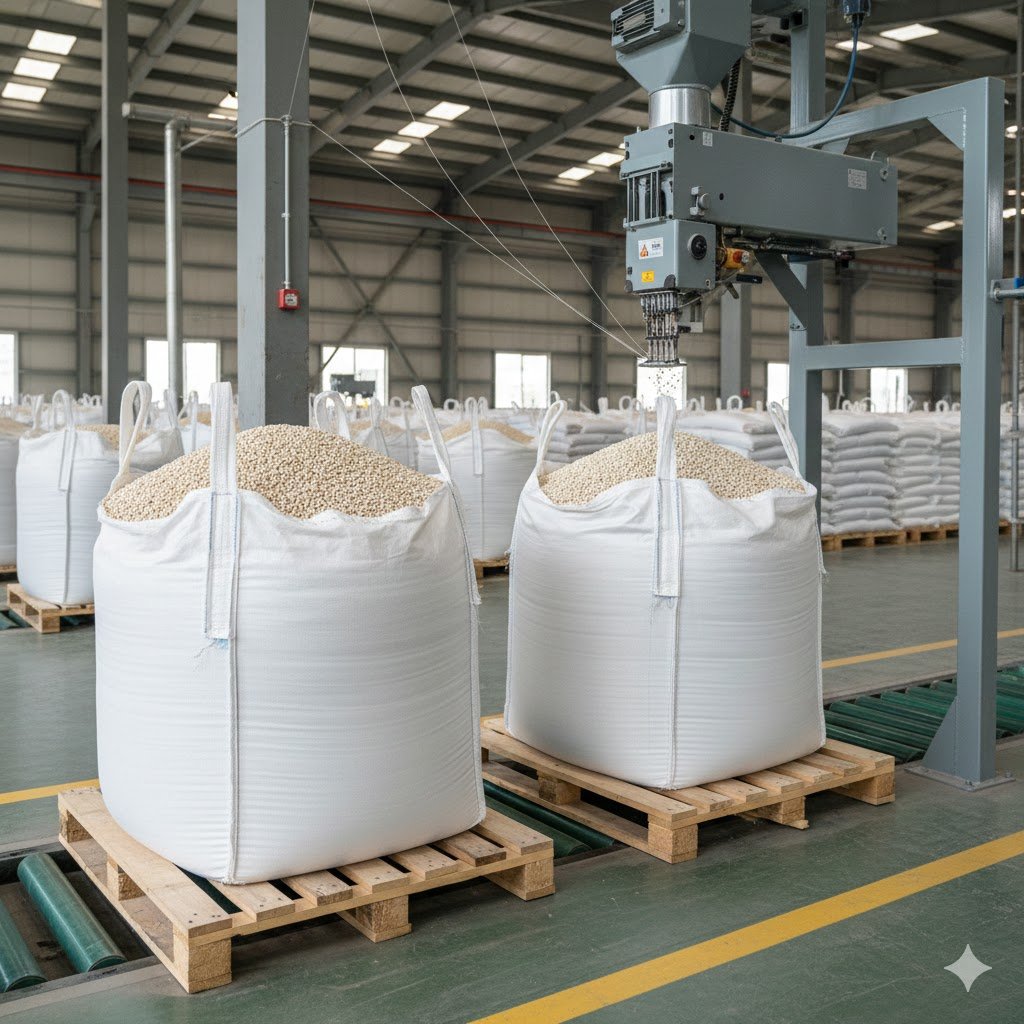
Choosing the right packaging is an important part of bulk kaolin clay procurement. The packaging format affects how kaolin powder is transported, unloaded, stored, and supplied to production facilities. For industrial buyers, selecting suitable packaging can help simplify material handling, protect the product from moisture and contamination, and improve warehouse organization.
Green Trade India supplies kaolin clay products for industrial requirements and helps buyers evaluate suitable packaging options according to order quantity, transportation arrangements, storage facilities, and handling needs.
In this guide, we explain the common kaolin clay packaging options, including standard bags, jumbo bags, and customized packaging, along with practical guidelines for selecting and storing bulk kaolin supplies.
Why Does Kaolin Clay Packaging Matter?
Kaolin clay packaging helps protect the material during transportation, storage, and handling. Since kaolin is commonly supplied in powder or other processed forms, packaging should be suitable for the product's physical characteristics and the conditions it may encounter throughout the supply chain.
Appropriate packaging can help buyers:
- Protect product quality: Suitable packaging helps limit exposure to external moisture, dust, and contaminants.
- Simplify material handling: The right bag size makes loading, unloading, movement, and distribution more manageable.
- Improve warehouse organization: Consistent packaging units can make stacking, inventory management, and stock rotation easier.
- Support efficient transportation: Packaging should match shipment volume, vehicle capacity, and unloading arrangements.
- Meet production requirements: Buyers can select packaging based on how much material is needed for each production batch.
The best packaging choice depends on the type and quantity of kaolin being purchased, the transportation method, and the facilities available at the receiving location.
What Are the Common Packaging Options for Bulk Kaolin Clay?
Bulk kaolin clay is commonly supplied in standard bags or larger-capacity jumbo bags. Custom packaging may also be considered when the buyer has specific handling, storage, or transportation requirements.
1. Standard Kaolin Clay Bags
Standard kaolin clay bags are suitable for industrial buyers who need manageable packaging units for regular production and material distribution. Bag sizes such as 25 kg and 50 kg are common options in industrial mineral supply, although actual availability depends on the supplier, product, and order requirements.
Benefits of standard kaolin bags include:
- Easier movement in facilities equipped for bag handling
- Convenient distribution of material across production areas
- Flexibility when smaller quantities are needed for individual batches
- Practical inventory management through individual package counting
- Compatibility with suitable manual or mechanical handling methods
Standard bags can be a practical choice for manufacturers that consume kaolin in controlled quantities or do not have dedicated jumbo-bag handling equipment.
Before placing an order, confirm the available bag weight, packaging material, dimensions, and suitability for the specific kaolin product.
2. Kaolin Powder Packaging for Bulk Orders
Kaolin powder packaging for bulk orders should be selected according to the complete supply process, rather than purchase volume alone. Buyers should consider how the material will be loaded, transported, received, stored, and transferred into production.
For example, a manufacturing facility that receives several tonnes of kaolin may prefer larger packaging units if suitable lifting equipment and storage space are available. A facility that handles material in smaller batches may find standard bags more convenient.
When evaluating kaolin powder packaging, consider:
- Total order quantity and shipment frequency
- Bag weight and packaging dimensions
- Transportation distance and shipment conditions
- Warehouse space and stacking arrangements
- Unloading equipment and material transfer systems
- Protection against moisture and external contamination
Discussing these factors with the supplier before dispatch can help reduce receiving difficulties and ensure the packaging suits the buyer's operational requirements.
3. Kaolin Jumbo Bags for Industrial Supply
Kaolin jumbo bags are large-capacity flexible bags used for transporting and storing bulk quantities of kaolin clay or powder. They are often considered by industrial buyers that need to handle larger quantities with fewer individual packaging units.
Depending on the bag design and supplier specifications, jumbo bags may include lifting loops, filling arrangements, discharge features, or an inner liner.
Key considerations when choosing kaolin jumbo bags include:
- Rated capacity: Confirm the bag's safe working load and ensure it matches the intended material weight.
- Lifting arrangements: Check whether the bag design is compatible with the site's forklift, hoist, or other lifting equipment.
- Packaging protection: Evaluate whether the bag construction and any liner provide suitable protection against moisture and contamination.
- Filling and discharge requirements: Confirm how the bag will be filled and how kaolin will be transferred into storage or production.
- Storage conditions: Ensure the warehouse has sufficient space and an appropriate surface for storing loaded bags.
Jumbo bags can be useful for large-volume procurement, but their suitability depends on the buyer's infrastructure, handling procedures, and product specifications.
4. Custom Kaolin Clay Packaging Options
Custom kaolin clay packaging may be considered when standard packaging formats do not meet a buyer's operational requirements. Customization should be discussed with the supplier before the order is finalized.
Depending on availability and technical feasibility, buyers may need to discuss:
- Required net weight per bag
- Bag dimensions and packaging construction
- Inner liners or additional moisture protection
- Lifting loops and discharge arrangements
- Product identification and shipment labelling
- Palletization and stacking requirements
- Destination-specific transport and handling needs
For example, a buyer using automated material-handling equipment may require a different bag configuration from a facility that unloads and distributes material manually.
Green Trade India can discuss packaging requirements with buyers to determine which available options are suitable for the order, product, and delivery arrangements. Any customized specifications should be confirmed before production or dispatch.
Standard Bags vs. Jumbo Bags: Which Is Better for Kaolin Clay?
Neither format is universally better. The appropriate choice depends on order size, equipment availability, storage capacity, and the way kaolin is consumed in production.
| Comparison factor | Standard bags | Jumbo bags |
|---|---|---|
| Packaging format | Smaller individual units | Larger-capacity flexible units |
| Handling | Suitable manual or mechanical handling, depending on weight | Usually requires compatible lifting equipment |
| Material distribution | Convenient for smaller production batches | May require additional transfer or discharge arrangements |
| Warehouse planning | Requires space for more individual packages | Requires sufficient space for larger loaded bags |
| Typical consideration | Flexible distribution and package-level inventory | Bulk movement with fewer individual packages |
| Best suited to | Facilities handling manageable quantities | Facilities equipped for larger-volume material handling |
The table provides general guidance. Actual packaging weights, capacities, construction, and available features should be confirmed with the supplier.
How to Choose the Right Kaolin Clay Packaging
Before ordering bulk kaolin clay, evaluate the following factors to select packaging that fits your operations.
1. Determine Your Required Quantity
Estimate your regular consumption, shipment frequency, and available storage capacity. Smaller or more frequent purchases may be easier to manage in standard bags, while larger recurring orders may justify considering jumbo bags.
2. Check Your Material-Handling Equipment
Identify how the kaolin will be unloaded and transferred after delivery. If your facility uses forklifts or lifting systems, confirm that the selected packaging is compatible with the equipment and the manufacturer's handling instructions.
3. Assess Storage Conditions
Choose packaging suitable for your storage environment. A clean, dry, covered warehouse and appropriate handling practices help protect kaolin from unwanted moisture and contamination.
4. Consider Transportation Requirements
Packaging should suit the mode of transport, shipment dimensions, stacking arrangements, and unloading facilities. For long-distance or multi-stage transportation, discuss additional protective measures with the supplier where necessary.
5. Confirm Product and Packaging Specifications
Before confirming the order, verify the kaolin product grade, required quantity, net weight per package, packaging type, and any applicable labelling or documentation requirements.
6. Discuss Custom Requirements in Advance
If you require a specific bag weight, liner, lifting arrangement, or other packaging feature, communicate the requirement before order confirmation. This allows the supplier to check feasibility and availability.
Kaolin Clay Storage Guidelines After Delivery
Suitable packaging should be supported by proper storage practices once the kaolin arrives at your facility. The following precautions can help maintain the material in appropriate condition until use.
- Store in a dry, covered area: Protect the bags from rain, water ingress, and excessive moisture.
- Keep packages off damp floors: Use suitable pallets or raised storage surfaces where appropriate.
- Inspect packaging on arrival: Check for tears, punctures, damaged seams, or signs of moisture exposure.
- Stack safely: Follow the packaging manufacturer's stacking guidance and your site's warehouse safety procedures.
- Maintain product identification: Keep labels and batch details legible to support traceability and stock rotation.
- Separate from potential contaminants: Store kaolin away from materials that could contaminate the product.
- Keep packaging intact until use: Open bags only when required and reseal or protect partially used material using an appropriate method.
Storage requirements may vary by product grade and intended application. Buyers should follow the supplier's product-specific recommendations wherever available.
What Should Buyers Confirm Before Ordering Bulk Kaolin?
A clear packaging discussion can help industrial buyers avoid unnecessary handling problems after delivery. Before placing an order with a kaolin supplier, confirm these details:
- Product requirements: Specify the required kaolin grade, form, and application.
- Order quantity: State the total quantity and expected purchasing frequency.
- Packaging preference: Indicate whether standard bags, jumbo bags, or another available format is preferred.
- Handling facilities: Explain whether the receiving site has forklifts, hoists, or other suitable equipment.
- Storage arrangements: Confirm available warehouse space and environmental conditions.
- Delivery details: Share the destination and relevant unloading restrictions.
- Packaging specifications: Request confirmation of bag weight, construction, liner availability, and handling features.
- Documentation: Confirm the product identification, batch details, and any quality documents required for the order.
Providing these details helps the supplier assess the available packaging options more accurately.
Source Bulk Kaolin Clay from Green Trade India
Choosing the right kaolin packaging is an important part of planning a reliable industrial supply process. Standard bags may offer convenient package-level handling, while jumbo bags can support larger-volume movement where appropriate equipment is available. Custom packaging may be considered when specific operational requirements need to be addressed.
Green Trade India supplies kaolin clay products for industrial buyers and can discuss product, quantity, and packaging requirements to help identify a suitable supply option.
Looking for bulk kaolin clay with suitable packaging for your facility? Contact Green Trade India to discuss your required quantity, preferred bag format, destination, and handling needs.
Frequently Asked Questions About Kaolin Clay Bulk Packaging
1. What are the common packaging options for bulk kaolin clay?
Common options include standard bags, such as 25 kg or 50 kg formats, and larger-capacity jumbo bags. Availability depends on the supplier and product specifications. The suitable option depends on order quantity, transport arrangements, storage conditions, and material-handling facilities.
2. What size bags are commonly used for kaolin clay?
Bag sizes such as 25 kg and 50 kg are common in industrial mineral supply. However, the actual available size depends on the product, supplier, and order requirements. Buyers should confirm the available net weight and packaging dimensions before placing an order.
3. What are kaolin jumbo bags?
Kaolin jumbo bags are large-capacity flexible bags designed to transport or store bulk quantities of kaolin clay or powder. Depending on their design, they may feature lifting loops, filling or discharge arrangements, and inner liners. They generally require compatible equipment for safe handling.
4. What are the benefits of using jumbo bags for bulk kaolin clay?
Jumbo bags allow larger quantities of kaolin to be transported in fewer individual packages. When suitable lifting and storage equipment is available, they can simplify package handling and warehouse movement. Their overall suitability depends on bag specifications, shipment requirements, and the buyer's infrastructure.
5. Can kaolin clay packaging be customized according to buyer requirements?
Packaging requirements can be discussed with the supplier based on order quantity, bag weight, packaging construction, liner requirements, lifting arrangements, labelling, and delivery conditions. Custom options depend on availability and technical feasibility, so specifications should be confirmed before the order is finalized.
6. How should bulk kaolin clay be stored after delivery?
Bulk kaolin clay should generally be stored in a clean, dry, covered area, protected from water, excessive moisture, and potential contaminants. Packages should be inspected for damage, stacked safely according to applicable guidance, and kept properly identified until the material is used.
7. How do I choose between standard kaolin bags and jumbo bags?
Consider your order volume, production batch sizes, storage space, unloading equipment, and material-transfer process. Standard bags may be more convenient for smaller batches or facilities without bulk-handling equipment. Jumbo bags may suit larger-volume operations that can handle them safely.
8. What should I check before ordering kaolin powder in bulk?
Confirm the kaolin grade, product specifications, total quantity, available packaging formats, net weight per bag, delivery destination, handling arrangements, and storage requirements. You should also discuss any required liners, labels, or quality documentation with your supplier before confirming the order.