


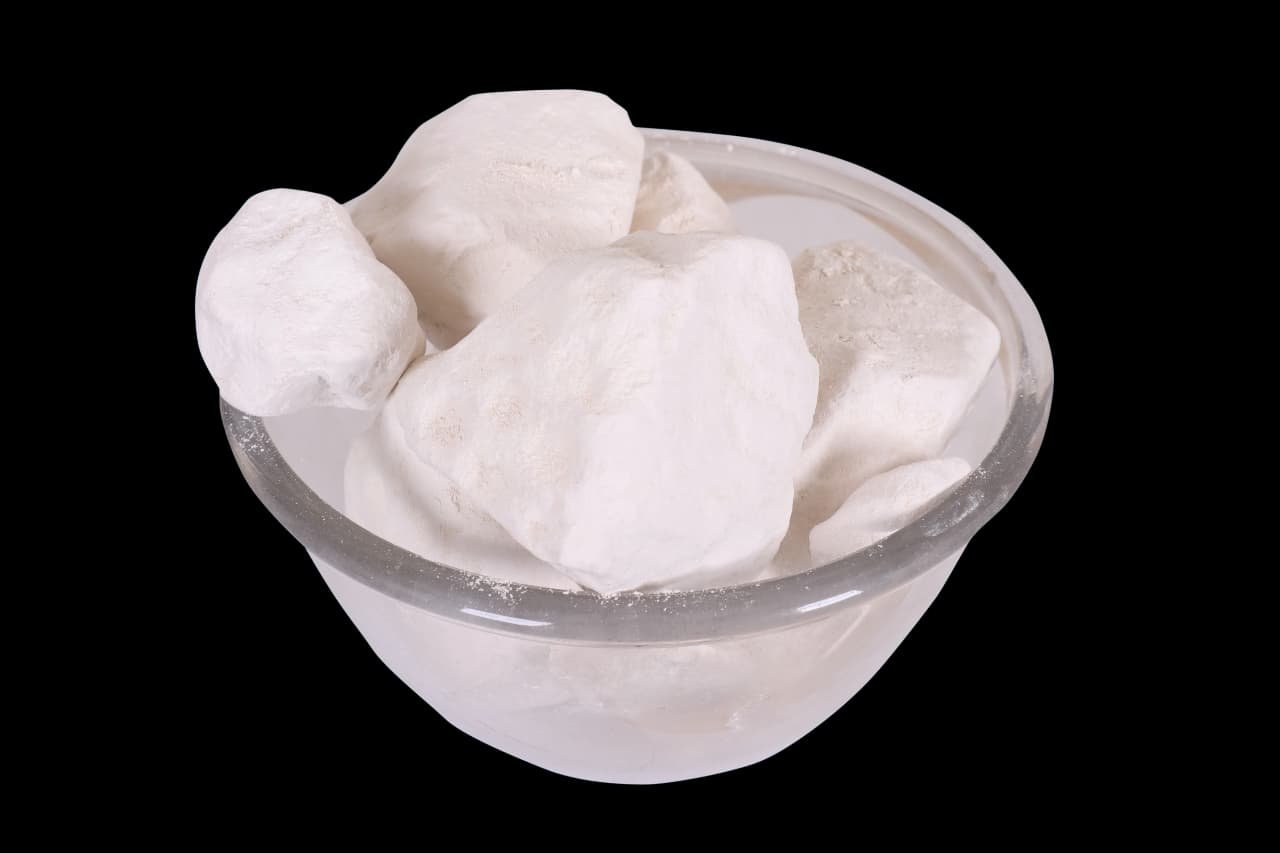
Kaolin clay is one of the most widely used industrial minerals due to its purity, stability, and versatility. For manufacturers, exporters, and businesses entering the mineral supply space, understanding what kaolin clay is, how it is formed, and why it is commercially valuable is essential for making informed sourcing decisions.
What Is Kaolin Clay?
Kaolin clay is a naturally occurring white clay composed primarily of the mineral kaolinite. It forms over millions of years through the weathering and decomposition of feldspar-rich rocks and is valued across industries for its fine particle size, chemical inertness, low shrinkage, and high brightness.
Because of these properties, kaolin clay is widely used in ceramics, paper manufacturing, paints, rubber, cosmetics, and pharmaceuticals.
What Is the Origin and Meaning of Kaolin Clay?
Kaolin clay originates from the long-term natural alteration of feldspar minerals under the influence of water and geological processes. Its name comes from "Kaoling", a hill in China where the clay was first discovered and mined for porcelain production.
Over time, these geological processes produce a clay that is:
- Exceptionally pure
- Soft to the touch
- Chemically stable
- Easy to process for industrial use
These qualities make kaolin clay especially suitable for beginners and high-precision manufacturing alike.
What Are the Key Properties of Kaolin Clay?
Kaolin clay is preferred in industrial applications due to a unique combination of physical and chemical characteristics.
Core Kaolin Clay Properties
| Property | Description |
|---|---|
| Primary Mineral | Kaolinite |
| Color | White to off-white |
| Particle Size | Very fine |
| Brightness | High |
| Shrink–Swell Behavior | Very low |
| Chemical Reactivity | Chemically inert |
| Texture | Smooth and silky |
Kaolin clay does not react easily with chemicals, making it highly reliable in manufacturing processes that require stability and uniformity.
What Are the Main Industrial Uses of Kaolin Clay?
Kaolin clay is used across a wide range of industries due to its consistency, purity, and functional performance.
Major Kaolin Clay Uses by Industry
- Ceramics: Improves shape retention, strength, and surface finish
- Paper Manufacturing: Enhances brightness, opacity, and printability
- Paints & Coatings: Acts as a filler and extender for smooth application
- Rubber & Plastics: Improves durability and mechanical strength
- Cosmetics & Skincare: Gently absorbs oil and impurities without irritation
- Pharmaceuticals: Used as an inactive ingredient due to its inert nature
This versatility makes kaolin clay a critical raw material in global manufacturing.
What Are the Key Benefits of Kaolin Clay for Manufacturers?
Understanding the commercial benefits of kaolin clay helps businesses make better sourcing and production decisions.
Primary Kaolin Clay Benefits
- Consistent performance across batches
- Improved durability and surface quality
- Cost-effective filler and functional mineral
- Easy to process and handle
- Stable chemical composition that minimizes production risk
These benefits make kaolin clay especially attractive for manufacturers seeking efficiency and product consistency.
Kaolin Clay for Beginners: What Should New Buyers Know?
For businesses new to mineral sourcing, kaolin clay may seem complex — but clarity begins with quality and supplier selection.
Key Considerations for Beginners
- Particle size requirements for your application
- Brightness and purity standards
- Consistency between batches
- Reliable logistics and supply continuity
- Transparent grading and quality control
Choosing the right supplier ensures that kaolin clay enhances production instead of causing variability or defects.
How to Choose the Right Kaolin Clay Grade
Different industries require different kaolin clay specifications. Selecting the correct grade depends on:
- End-use application
- Required brightness level
- Moisture content tolerance
- Particle size distribution
- Processing method (raw vs calcined kaolin)
Expert guidance helps businesses match the correct kaolin grade to their production needs.
Why Choose Green Trade India?
Green Trade India supplies high-quality kaolin clay to domestic and international markets, backed by industry expertise and strict quality control standards.
What Sets Green Trade India Apart?
- Consistent brightness, purity, and particle size
- Customized supply solutions for different industries
- Reliable sourcing and logistics
- Deep technical understanding of kaolin clay properties and applications
Whether you are researching kaolin clay for the first time or procuring bulk quantities for manufacturing, Green Trade India ensures dependable quality and long-term value.
Our Popular Products
Kaolin Clay | Kaolin Powder | Kaolin Noodles | Kaolin Granules | Sodium Bentonite Lumps | Calcium Bentonite Lumps
Frequently Asked Questions About Kaolin Clay
1. What is kaolin clay and how is it formed?
Kaolin clay is a naturally occurring white clay formed over millions of years through the weathering of feldspar-rich rocks. Water and geological processes break down feldspar into fine kaolinite particles, creating high-purity clay deposits.
2. What are the main properties of kaolin clay?
Kaolin clay is characterized by fine particle size, high brightness, low shrinkage, smooth texture, and chemical inertness, making it ideal for industrial and cosmetic applications.
3. What is kaolin clay used for?
Kaolin clay is used in ceramics, paper manufacturing, paints, rubber, cosmetics, and pharmaceuticals due to its stability, purity, and versatility.
4. How is kaolin clay different from bentonite clay?
Kaolin clay has low shrink–swell behavior and remains chemically inert, while bentonite clay expands significantly when exposed to moisture and is more chemically reactive.
5. Is kaolin clay safe for cosmetics and skincare?
Yes, kaolin clay is widely used in cosmetics due to its gentle absorption properties and low irritation potential, making it suitable for sensitive skin.
6. Which industries rely most on kaolin clay?
Ceramic, paper, paint, rubber, cosmetic, and pharmaceutical industries are the largest consumers of kaolin clay worldwide.