


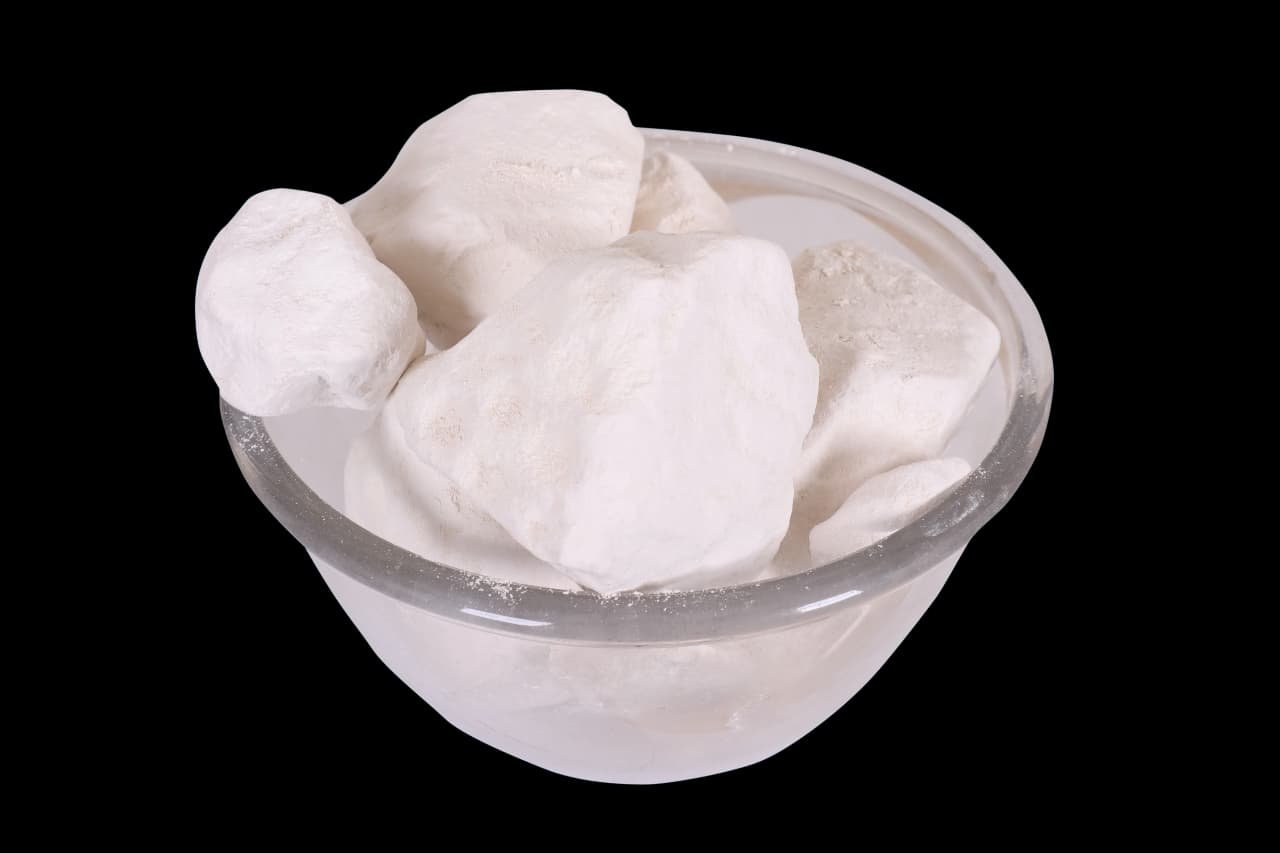
Kaolin clay is a naturally occurring mineral that is increasingly used in agriculture as a protective particle film for plants. When applied correctly, agricultural kaolin can form a fine coating on leaves, stems and fruit that reflects part of the incoming solar radiation and changes the surface environment of the plant.
So, what is kaolin clay used for in agriculture? Its main applications include helping manage heat and sunlight stress, protecting exposed plant surfaces, and deterring certain insect pests. Kaolin may be used on fruit trees, vegetables and other horticultural crops, depending on the crop, product formulation, application method and local agricultural recommendations.
However, kaolin clay is not a universal fertilizer, insecticide or soil conditioner. Its effectiveness depends on factors such as crop type, environmental conditions, application rate and coverage.
Quick Answer: What Is Kaolin Clay Used for in Agriculture?
Kaolin clay is primarily used in agriculture as a mineral particle film applied to plant surfaces. The resulting light-colored coating can reflect solar radiation, help manage heat stress and make plant surfaces less suitable to certain insect pests. Kaolin has applications across selected fruit, vegetable and horticultural crops, but results vary according to crop, climate, formulation and application practices.
Kaolin Clay in Agriculture at a Glance
| Application | Potential Benefit |
|---|---|
| Heat-stress management | Reflects part of incoming solar radiation |
| Sun protection | Can reduce heat and radiation load on exposed plant surfaces |
| Pest deterrence | May interfere with feeding and movement of certain insect pests |
| Fruit protection | Can provide a physical mineral coating on fruit surfaces |
| Vegetable crops | May support environmental-stress management in suitable crops |
| Horticultural crops | Can be incorporated into selected crop-management programs |
| Soil applications | Requires specific evaluation based on soil type and intended purpose |
What Is Kaolin Clay?
Kaolin is a naturally occurring clay mineral whose primary mineral component is kaolinite. It is widely used across several industries because of its fine particle size, light color, absorbency and mineral characteristics.
In agriculture, specially selected and appropriately formulated kaolin can be applied to plant surfaces as a particle film. After application, the water in the spray mixture evaporates and leaves a thin layer of mineral particles over the treated surface.
Unlike conventional fertilizers, kaolin is generally used for its physical properties rather than as a primary source of plant nutrients.
7 Uses of Kaolin Clay in Agriculture
The potential applications of kaolin clay vary according to crop, climate, pest pressure, formulation and agricultural objectives. Some of the most important uses include the following.
1. Managing Heat Stress in Crops
One of the important applications of kaolin clay is helping crops manage periods of high temperature and intense sunlight.
When a suitable kaolin particle film covers plant surfaces, its light-colored appearance can reflect a portion of incoming solar radiation. This may help reduce the heat load experienced by exposed leaves and fruit under certain conditions.
Kaolin should not be considered a replacement for irrigation or other heat-management practices. Instead, it can be evaluated as one component of a broader crop-management strategy.
2. Reflecting Excess Sunlight
Plants exposed to intense sunlight can experience excessive radiation and heat, particularly during hot and dry periods.
A properly applied kaolin coating creates a reflective surface over treated plant parts. This can change the amount of solar energy absorbed by leaves and fruit.
The effectiveness of the coating depends heavily on uniform coverage. If large areas of the plant surface remain untreated, the expected benefit may be reduced.
3. Helping Protect Fruits and Leaves from Sun Stress
Fruit and exposed plant tissues can be particularly vulnerable to high temperatures and intense sunlight.
Kaolin particle films can create a physical mineral coating over treated surfaces. Under suitable conditions, this coating may help reduce the amount of direct solar radiation reaching the surface.
This application can be relevant for certain fruit trees, horticultural crops and other plants grown under strong sunlight.
However, crop response can vary, so agricultural kaolin should be evaluated according to the specific crop and growing environment.
4. Deterring Certain Insect Pests
Kaolin can also have a role in physical pest deterrence.
Unlike a conventional insecticide that is designed to kill insects, kaolin particle films can make treated plant surfaces less attractive or suitable for certain pests. The mineral coating may interfere with insect movement, feeding or host recognition.
This means kaolin is better described as a physical or behavioral pest deterrent rather than a universal insecticide.
Its effectiveness depends on the insect species, crop, coverage, weather and application program.
5. Supporting Crops During Environmental Stress
Agricultural crops can experience several forms of environmental stress, including:
- High temperatures
- Intense solar radiation
- Dry conditions
- Water stress
- Heat-related damage to exposed fruit and foliage
By changing the physical conditions at the plant surface, kaolin particle films may complement broader crop-management practices designed to reduce environmental stress.
Kaolin does not replace adequate irrigation, soil management, plant nutrition or other essential agricultural practices.
6. Applications on Fruit, Vegetable and Horticultural Crops
Kaolin clay can be considered for a range of agricultural and horticultural crops.
Potential applications may include:
- Fruit trees
- Grapes
- Citrus crops
- Tomatoes
- Vegetables
- Horticultural plants
- Other selected agricultural crops
The suitability of kaolin varies considerably between crops. Factors such as crop variety, growth stage, weather, pest pressure, application concentration and intended purpose should be considered before use.
7. Selected Soil and Ground Applications
Although kaolin is sometimes discussed in connection with soil applications, it should not automatically be considered a universal soil improver.
Its interaction with soil can depend on factors including:
- Soil texture
- pH
- Drainage
- Organic matter
- Mineral composition
- Application rate
- Kaolin characteristics
- Intended agricultural purpose
For this reason, soil applications should be evaluated separately from foliar particle-film applications.
Farmers should assess their soil conditions and application objectives before incorporating kaolin into a soil-management program.
How Does Kaolin Clay Work on Plants?
Kaolin works primarily through a physical particle-film effect rather than by acting as a conventional plant nutrient.
When agricultural kaolin is appropriately mixed and sprayed onto plant surfaces, the water evaporates and leaves behind fine mineral particles. The resulting film can:
- Reflect part of the incoming solar radiation
- Reduce the heat load on exposed plant surfaces
- Modify the surface environment around leaves and fruit
- Make some plant surfaces less attractive to certain insect pests
- Complement other crop-management practices
The effectiveness of the treatment depends on achieving suitable and relatively uniform coverage.
Weather conditions can also affect performance. For example, rainfall may reduce the amount of kaolin remaining on plant surfaces, potentially making additional applications necessary according to the product label.
Does Kaolin Clay Reduce Heat Stress in Plants?
Kaolin clay can help manage heat and solar stress in certain crops by forming a reflective particle film on plant surfaces.
The light-colored coating can reflect a portion of solar radiation and may reduce the amount of heat absorbed by treated leaves and fruit.
However, the response is not identical across all plants. Crop type, environmental conditions, application rate, formulation and coverage can all influence results.
Kaolin should therefore be considered a supportive crop-management tool, not a replacement for irrigation, shade management, appropriate planting practices or other methods of managing heat stress.
Does Kaolin Clay Control Insects?
Kaolin clay can help deter certain insect pests, but it should not be described as a broad-spectrum insecticide.
The particle film can make treated plant surfaces less attractive or suitable for some insects. Depending on the pest, the coating may interfere with feeding, movement or host recognition.
Its effectiveness varies according to:
- Pest species
- Crop
- Pest population
- Application coverage
- Weather
- Kaolin formulation
- Timing of application
For pest management, kaolin is best considered as one possible component of an integrated pest management (IPM) approach.
Which Crops Can Use Kaolin Clay?
Kaolin clay has been evaluated for use on various agricultural and horticultural crops, including fruit, vegetable and specialty crops.
Potential crop applications include:
Fruit Crops
Kaolin particle films may be considered for selected:
- Apple crops
- Citrus
- Grapes
- Stone fruits
- Other fruit trees
Vegetable Crops
Potential applications may include selected:
- Tomato crops
- Vegetable plants
- Specialty vegetable crops
Horticultural Crops
Kaolin may also be evaluated for selected ornamental and horticultural plants where a particle-film application is appropriate.
Important: Not every crop will respond in the same way. Always consider the product label, crop sensitivity, growth stage, environmental conditions and intended purpose before application.
How to Apply Kaolin Clay to Crops
The correct application method depends on the specific agricultural kaolin formulation and crop.
A general application process may involve:
1. Choose an Appropriate Agricultural Product
Use a kaolin product intended for the proposed agricultural application.
2. Follow the Product Instructions
Mixing concentration, application rate and frequency should be based on the manufacturer's instructions and applicable agricultural recommendations.
3. Prepare the Suspension Correctly
Kaolin is a fine mineral powder and must be properly dispersed in water when used as a spray. Follow the product's mixing instructions to maintain a suitable suspension.
4. Apply Evenly
Good coverage is important because kaolin works as a particle film. The objective should be suitable coverage of the intended plant surfaces rather than unnecessary buildup.
5. Monitor Weather Conditions
Rain can reduce the amount of kaolin remaining on plant surfaces. Weather conditions should therefore be considered when planning applications.
6. Reapply When Appropriate
Additional applications may be required depending on rainfall, plant growth, product instructions and the desired level of coverage.
Always follow the specific product label and crop-specific recommendations rather than relying on a universal application rate.
Benefits of Kaolin Clay in Agriculture
When appropriately selected and applied, agricultural kaolin may offer several potential benefits.
Potential benefits include:
- Reflecting excess solar radiation
- Supporting heat-stress management
- Creating a physical particle film
- Providing a physical deterrent against certain insect pests
- Supporting protection of exposed leaves and fruit
- Complementing integrated crop-management practices
- Offering a mineral-based approach for selected agricultural applications
The actual benefit depends on the crop, formulation, application method and environmental conditions.
Limitations of Kaolin Clay in Agriculture
Kaolin is not a universal solution for crop production.
Important limitations include:
- It does not replace irrigation.
- It does not replace essential plant nutrients.
- It is not a universal insecticide.
- It does not automatically improve every type of soil.
- Effectiveness varies between crops and pests.
- Rain can remove some of the particle film.
- Uniform coverage is important.
- Excessive application may create unwanted residue on some crops.
- Organic-farming suitability depends on the specific product and applicable certification requirements.
Understanding these limitations can help farmers use kaolin more responsibly and effectively.
Can Kaolin Clay Improve Soil?
Kaolin should not automatically be considered a general-purpose soil improver.
Its behavior in soil depends on the soil's physical and chemical properties, the amount applied and the purpose of the application.
Factors such as soil texture, pH, drainage, organic matter and existing mineral composition can influence how kaolin interacts with the soil.
Therefore, farmers considering kaolin soil applications should evaluate the specific soil and agricultural objective before use.
For foliar crop applications, kaolin is primarily valued for its particle-film properties rather than as a conventional soil amendment.
Is Kaolin Clay Suitable for Organic Farming?
Kaolin is a naturally occurring mineral, but natural does not automatically mean that every kaolin product is approved for certified organic farming.
Organic certification requirements can vary by region and production system. Farmers should verify:
- Product composition
- Purity and specifications
- Intended agricultural use
- Applicable certification requirements
- Local regulations
- Organic farming standards
If organic certification is important, confirm that the specific product is permitted before using it in a certified production system.
Kaolin Clay vs. Conventional Crop Protection
Kaolin works differently from conventional chemical crop-protection products.
| Kaolin Particle Film | Conventional Crop Protection |
|---|---|
| Primarily physical action | Often chemical or biological action |
| Forms a mineral coating | May act directly on pests or pathogens |
| Can reflect solar radiation | Usually designed for a specific target |
| May deter certain insects | May control targeted pests |
| Can complement IPM | May be one component of IPM |
| Effectiveness depends on coverage | Effectiveness depends on product and target |
The choice between approaches should depend on the crop, pest or environmental challenge, farming system and applicable recommendations.
Is Kaolin Clay Safe for Plants?
Kaolin can be used on certain crops as a particle-film material when an appropriate agricultural formulation is applied according to its intended use.
However, “safe for plants” should not be interpreted as “suitable for every plant or application.”
Crop sensitivity, concentration, application timing, coverage and product formulation can all influence plant response.
Before commercial application, growers should follow the product label and consider crop-specific recommendations.
Why Choose Green Trade India for Kaolin?
Selecting an agricultural mineral should involve more than simply choosing a product based on its name.
Green Trade India focuses on supplying mineral materials while helping customers understand their product specifications, intended applications and practical considerations.
For agricultural kaolin, important considerations can include:
- Product purity
- Particle characteristics
- Intended application
- Product consistency
- Crop requirements
- Application method
- Relevant specifications
Whether you are evaluating kaolin for crop applications, particle-film use or other agricultural requirements, selecting an appropriate material and using it according to its intended purpose are essential.
Contact Green Trade India to discuss your kaolin requirements and product specifications.
Final Takeaway
Kaolin clay in agriculture is primarily valued for its particle-film properties. When appropriately formulated and applied, it can help manage heat and solar stress and may deter certain insect pests on selected crops.
Its effectiveness depends on the crop, kaolin formulation, application rate, coverage, weather conditions and intended agricultural objective.
Kaolin should therefore be viewed as a complementary crop-management material rather than a replacement for irrigation, nutrition, soil management or conventional crop-protection practices.
For farmers and agricultural businesses considering kaolin, the best approach is to evaluate the specific product, crop and application objective before use.
Looking for agricultural kaolin? Contact Green Trade India to discuss product specifications and your application requirements.
Our Popular Categories
Kaolin Powder | Kaolin Noodles | Kaolin Granules
Frequently Asked Questions About Kaolin Clay in Agriculture
1. What is kaolin clay used for in agriculture?
Kaolin clay is primarily used as a mineral particle film on selected crops. The coating can reflect solar radiation, help manage heat and sun stress, and deter certain insect pests. Its suitability depends on the crop, product formulation, application method and growing conditions.
2. How does kaolin clay benefit crops?
Kaolin can form a light-colored mineral coating over leaves and fruit. This coating may reflect solar radiation, reduce heat load on exposed plant surfaces and make some surfaces less attractive to certain insect pests.
3. Does kaolin clay reduce heat stress?
Kaolin particle films can help reduce heat and solar stress in certain crops by reflecting part of the incoming solar radiation. Results vary according to crop, environmental conditions, formulation, application rate and coverage.
4. Does kaolin clay kill insects?
Kaolin is generally better described as a physical or behavioral insect deterrent rather than a conventional insecticide. Its particle film can interfere with the feeding or movement of certain pests, but effectiveness varies by insect species and application conditions.
5. Which crops benefit from kaolin clay?
Potential applications include selected fruit trees, grapes, citrus, vegetables, tomatoes and other horticultural crops. However, not every crop responds identically, so crop-specific recommendations should be followed.
6. Can kaolin clay improve soil quality?
Kaolin should not automatically be considered a universal soil conditioner. Its effect on soil depends on soil type, mineral characteristics, application rate and the intended purpose. Soil conditions should be evaluated before using kaolin as a soil-related input.
7. Is kaolin clay safe for plants?
Agricultural kaolin can be used on appropriate crops when the correct product is applied according to its intended use. Crop sensitivity and application conditions should always be considered, and product-label instructions should be followed.
8. Can kaolin clay be used in organic farming?
Kaolin is naturally occurring, but not every kaolin product is automatically approved for certified organic production. Farmers should verify the specific product and applicable organic certification requirements before use.
9. How is kaolin clay applied to plants?
Agricultural kaolin is commonly applied as a spray that forms a particle film over plant surfaces. The correct concentration, mixing procedure, coverage and application frequency depend on the product and crop. Always follow the manufacturer's label and agricultural recommendations.
10. Does rain wash kaolin clay off plants?
Rain can reduce or remove kaolin from plant surfaces. The amount removed depends on rainfall intensity, product formulation and the existing coating. Reapplication may be necessary when adequate coverage is lost, according to product instructions.
11. Is kaolin clay a fertilizer?
Kaolin is not generally used as a conventional fertilizer. Its agricultural value primarily comes from its physical particle-film properties, such as reflecting solar radiation and creating a mineral coating on plant surfaces.