


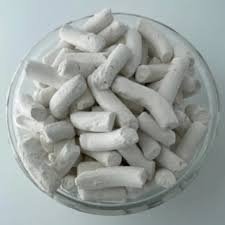
Kaolin clay noodles are advanced processed forms of kaolin clay, also known as china clay, manufactured for efficient industrial handling, consistent processing, and high-performance applications. Produced by refining and extruding purified kaolin into uniform noodle-shaped strips, these industrial mineral products are widely used across ceramics, refractories, paper manufacturing, paints, rubber, plastics, adhesives, and construction industries.
Due to their superior handling characteristics, low dust generation, thermal stability, and controlled moisture content, kaolin clay noodles have become a preferred raw material solution for manufacturers seeking consistent product quality and improved processing efficiency.
At Green Trade India, we supply premium-grade kaolin clay noodles engineered to meet the demanding technical specifications of modern industrial applications.
What Are Kaolin Clay Noodles?
Kaolin clay noodles are extruded forms of refined kaolin clay processed into elongated noodle-like shapes for easier transportation, storage, feeding, and industrial usage. Unlike conventional loose kaolin powder, noodle-form kaolin offers improved operational convenience while maintaining the core mineral characteristics that make kaolin valuable in manufacturing.
Kaolin itself is a naturally occurring hydrated aluminum silicate mineral primarily composed of:
Al₂Si₂O₅(OH)₄
The mineral is known for its high whiteness, fine particle size, chemical inertness, low abrasiveness, and excellent thermal resistance.
The noodle manufacturing process typically involves:
- Raw kaolin purification
- Removal of impurities
- Moisture balancing
- Extrusion processing
- Controlled drying
- Quality inspection
This process ensures uniformity, consistent performance, and easier industrial handling.
Kaolin Clay Noodles at a Glance
| Feature | Details |
|---|---|
| Product Type | Processed Kaolin Clay |
| Alternative Name | China Clay |
| Chemical Composition | Hydrated Aluminum Silicate |
| Physical Form | Extruded Noodles |
| Color | White to Off-White |
| Key Benefits | Easy Handling, Low Dust, Uniform Quality |
| Major Industries | Ceramics, Paper, Rubber, Paints, Refractories |
| Thermal Stability | Excellent |
| Chemical Resistance | High |
| Industrial Function | Filler, Coating Agent, Reinforcement Material |
Key Properties of Kaolin Clay
Understanding the physical and chemical properties of kaolin clay is essential for selecting the right industrial mineral for specific manufacturing applications.
1. Fine Particle Structure
Kaolin possesses an extremely fine particle size distribution, enabling smooth surface finishes, improved dispersion, and enhanced product uniformity across industrial applications.
2. High Whiteness
The natural whiteness of kaolin makes it highly suitable for ceramics, paper coating, paints, and decorative products where brightness and clean appearance are important.
3. Excellent Plasticity
Kaolin demonstrates excellent plasticity during shaping and molding processes, particularly in ceramic and refractory manufacturing applications.
4. Thermal Stability
One of the most valuable characteristics of kaolin clay is its ability to withstand high temperatures without significant structural degradation. This makes it ideal for refractory products and heat-resistant applications.
5. Low Abrasiveness
Its low abrasiveness reduces machinery wear during industrial processing and improves operational efficiency.
6. Chemical Inertness
Kaolin is chemically stable and resistant to many industrial chemicals, allowing its use in demanding manufacturing environments.
7. Electrical Insulation Properties
Kaolin exhibits strong insulating characteristics, making it useful in specialized industrial and electrical applications.
Technical Specifications of Kaolin Clay Noodles
Industrial buyers often evaluate kaolin clay based on technical specifications and purity levels.
Typical Kaolin Clay Specifications
| Property | Typical Value |
|---|---|
| Chemical Formula | Al₂Si₂O₅(OH)₄ |
| Moisture Content | Controlled |
| Color | White / Off-White |
| Alumina Content | High |
| Iron Content | Low |
| Particle Size | Fine |
| pH Value | 4–7 |
| Thermal Resistance | Excellent |
| Plasticity | High |
| Impurity Level | Minimal |
Precise specifications may vary depending on application requirements and industrial processing needs.
At Green Trade India, strict quality control procedures ensure consistency across every batch supplied to customers.
Benefits of Kaolin Clay Noodles
Easier Industrial Handling
The noodle-shaped structure significantly improves handling, storage, transportation, and feeding efficiency compared to loose powder materials.
Reduced Dust Generation
Kaolin noodles minimize airborne dust during handling and processing, helping maintain cleaner industrial environments.
Better Process Control
Uniform moisture distribution and consistent shape improve manufacturing precision and operational stability.
Lower Material Loss
Reduced spillage and dust formation help manufacturers minimize raw material wastage.
Improved Storage Efficiency
Kaolin noodles are easier to package, stack, transport, and store safely.
Consistent Product Quality
Controlled production processes ensure reliable mineral performance across industrial applications.
Major Industrial Uses of Kaolin Clay Noodles
Ceramics Industry
Kaolin is one of the most important raw materials used in ceramic manufacturing. It improves:
- Product strength
- Surface smoothness
- Dimensional stability
- Whiteness
- Thermal resistance
Applications include:
- Tiles
- Sanitaryware
- Porcelain
- Tableware
- Technical ceramics
Refractory Industry
Due to excellent heat resistance and structural stability, kaolin is extensively used in refractory applications such as:
- Fire bricks
- Kiln linings
- Furnace insulation
- Heat-resistant castables
Paper Industry
In paper manufacturing, kaolin functions as both a filler and coating material.
Benefits include:
- Improved brightness
- Better printability
- Enhanced smoothness
- Increased opacity
- Improved ink absorption
Paint and Coating Industry
Kaolin is widely used in paints and coatings to improve:
- Surface finish
- Suspension properties
- Durability
- Opacity
- Coating uniformity
Rubber Industry
Kaolin acts as a reinforcing filler in rubber products, enhancing:
- Mechanical strength
- Abrasion resistance
- Product durability
- Dimensional stability
Plastics Industry
In plastics manufacturing, kaolin improves:
- Rigidity
- Surface finish
- Thermal resistance
- Processability
Construction Materials
Kaolin is used in several construction applications including:
- Cement products
- Wall putty
- Adhesives
- Sealants
- Insulation materials
Why Industries Prefer Kaolin Clay Noodles Over Powder?
| Kaolin Clay Noodles | Traditional Kaolin Powder |
|---|---|
| Easier to Handle | Higher Dust Formation |
| Reduced Material Loss | Greater Wastage |
| Cleaner Processing | Dustier Operations |
| Better Storage | Bulk Handling Challenges |
| Uniform Structure | Inconsistent Flow |
| Improved Feeding Efficiency | Powder Dispersion Issues |
This operational efficiency is driving growing industrial demand for noodle-form kaolin products worldwide.
How to Choose the Right Kaolin Clay Grade
Selecting the correct kaolin grade depends on several technical and operational factors:
Consider:
- Particle size requirements
- Alumina content
- Iron impurity levels
- Moisture control
- Thermal resistance
- Application compatibility
- Surface finish requirements
- Processing temperature conditions
Working with an experienced supplier helps manufacturers identify the most suitable mineral specification for their production requirements.
Why Choose Green Trade India?
Green Trade India is a trusted supplier of high-quality kaolin clay products for industrial applications across India and international markets.
Our Strengths
- Premium-grade mineral sourcing
- Strict quality control systems
- Consistent product specifications
- Reliable bulk supply capability
- Customized industrial solutions
- Competitive pricing
- Timely delivery support
- Industry-focused technical expertise
We serve industries including:
- Ceramics
- Refractories
- Paper
- Paints
- Rubber
- Plastics
- Construction materials
Our focus remains on delivering consistent mineral quality that supports manufacturing efficiency and long-term industrial performance.
Future Demand for Kaolin Clay in Industrial Applications
Global demand for industrial minerals continues to rise as manufacturers seek high-performance raw materials that improve operational efficiency and product quality.
Kaolin clay is expected to remain a critical industrial mineral due to:
- Expanding ceramics production
- Growth in construction activities
- Increasing paper coating demand
- Rising paint and coating consumption
- Demand for advanced refractory materials
The shift toward cleaner handling materials and process optimization is also increasing demand for kaolin clay noodles over traditional powder formats.
Conclusion
Kaolin clay noodles represent a highly efficient, versatile, and performance-driven industrial mineral solution for modern manufacturing industries. Their excellent thermal stability, fine particle structure, chemical inertness, easy handling characteristics, and wide industrial compatibility make them essential across ceramics, refractories, paper, rubber, paints, plastics, and construction sectors.
As industries continue prioritizing quality consistency, operational efficiency, and advanced raw material performance, demand for premium-grade kaolin clay products is expected to grow significantly.
At Green Trade India, we remain committed to supplying high-quality kaolin clay noodles tailored to the technical and operational needs of industrial manufacturers.
Frequently Asked Questions (FAQs)
1. What are kaolin clay noodles used for?
Kaolin clay noodles are used in ceramics, refractories, paper coating, rubber products, paints, plastics, adhesives, and construction materials due to their excellent handling properties and industrial performance.
2. How are kaolin clay noodles different from kaolin powder?
Kaolin clay noodles are extruded forms of kaolin designed for easier handling, lower dust generation, improved storage, and better process efficiency compared to traditional powder forms.
3. What industries commonly use kaolin clay noodles?
Industries such as ceramics, paper, paints, rubber, plastics, refractories, adhesives, and construction materials commonly use kaolin clay noodles.
4. What is the chemical composition of kaolin clay?
Kaolin clay primarily consists of hydrated aluminum silicate with the chemical formula:
Al₂Si₂O₅(OH)₄
5. Are kaolin clay noodles heat resistant?
Yes. Kaolin clay noodles possess excellent thermal stability and are widely used in high-temperature industrial applications including refractories and ceramic manufacturing.
6. Why is kaolin called china clay?
Kaolin is often called china clay because it was historically used in the manufacture of fine porcelain and ceramic products originally developed in China.
7. What are the advantages of kaolin clay noodles?
Key advantages include:
- Easy handling
- Reduced dust formation
- Better storage efficiency
- Improved process consistency
- Lower material loss
- Enhanced industrial safety
8. Can kaolin clay noodles be customized for industrial applications?
Yes. Kaolin products can be processed according to specific particle size, purity, moisture, and performance requirements based on industrial application needs.