


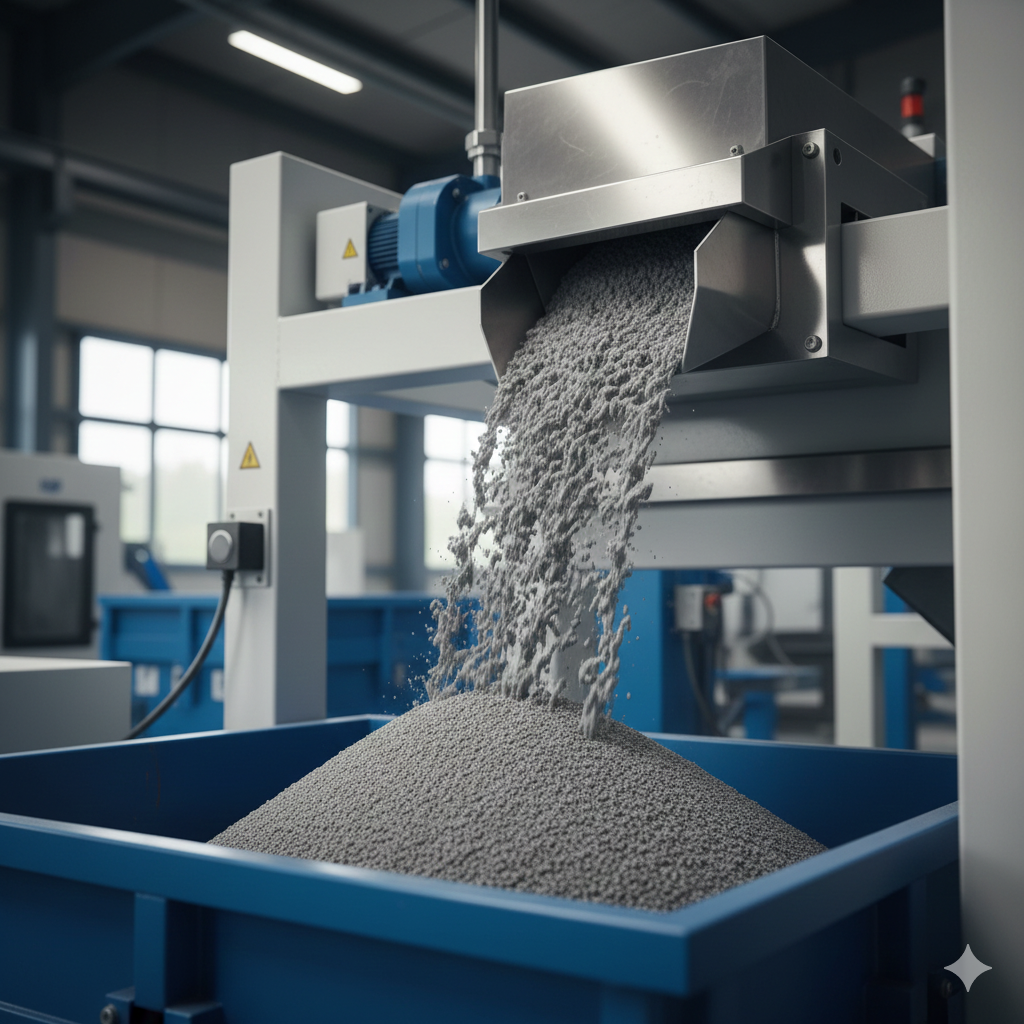
Kaolin clay is an important functional mineral used in paints and coatings to improve properties such as opacity, whiteness, surface finish, suspension, rheology, and application performance. It can also act as a pigment extender, helping formulators optimize the use of higher-cost pigments such as titanium dioxide (TiO₂).
Quick answer: Kaolin clay for paint is primarily used as a functional filler and pigment extender. Depending on the grade and formulation, it can contribute to opacity, brightness, gloss control, smoothness, suspension stability, and coating performance. Hydrous and calcined kaolin offer different characteristics, so the right grade should be selected according to the coating system and desired performance.
For paint manufacturers, the objective is not simply to choose "kaolin," but to select a grade with the right combination of particle size, brightness, oil absorption, dispersion, opacity and rheological characteristics.
What Does Kaolin Do in Paint and Coatings?
Kaolin is a naturally occurring aluminosilicate mineral that is processed into different grades for industrial applications.
In paint formulations, kaolin can perform several functions simultaneously. It may contribute to hiding power, surface appearance, pigment spacing, suspension, and application properties while helping manufacturers optimize formulation economics.
Kaolin is particularly relevant in architectural paints, water-based coatings, primers, industrial coatings, wood coatings and other formulated coating systems.
Its performance depends heavily on the grade used and how the mineral interacts with pigments, binders, dispersants and other formulation components.
10 Benefits of Kaolin Clay in Paints & Coatings
1. Helps Improve Opacity and Hiding Power
One of the most important reasons kaolin is used in coatings is its contribution to optical performance.
Fine, suitably processed kaolin grades can improve light scattering and contribute to hiding power. Calcined kaolin is particularly valued in formulations where higher opacity and brightness are required.
2. Acts as a Functional Filler and Pigment Extender
Kaolin is more than an inert filler. Its particle characteristics can influence the structure and performance of a coating.
It can be used as a functional mineral extender alongside pigments, helping formulators balance performance, coverage and formulation cost.
3. Can Help Optimize Titanium Dioxide Usage
Titanium dioxide is widely used because of its excellent opacity and whiteness, but it is also a comparatively expensive component of many white paint formulations.
Selected kaolin grades can be incorporated as part of a pigment-extender strategy to help optimize TiO₂ usage without simply treating kaolin as a one-for-one replacement.
Research and industry literature recognize kaolin as an important extender option for reducing dependence on TiO₂ while maintaining desirable coating properties.
Important: The achievable TiO₂ reduction depends on the formulation, pigment volume concentration, particle-size distribution, coating type and selected kaolin grade. It should therefore be established through formulation testing rather than assumed as a fixed percentage.
4. Supports Surface Finish
The particle size and morphology of kaolin influence the final appearance of a coating.
A properly selected grade can contribute to a smoother, more uniform surface and help formulators achieve the required finish.
5. Helps Control Gloss and Sheen
Different kaolin grades can influence the optical and surface characteristics of paint.
This makes kaolin useful in formulations where manufacturers need to balance gloss, sheen, whiteness and hiding power.
6. Supports Suspension and Rheology
Kaolin can influence the rheological behavior and suspension characteristics of a formulation.
This can be particularly useful in water-based paint systems where pigment and mineral dispersion, viscosity and storage stability need to be carefully controlled.
Certain engineered kaolin grades are specifically designed to improve rheology and reduce cracking in water-based coating systems.
7. Improves Application Characteristics
The right mineral grade can contribute to application properties such as consistency, flow and surface appearance.
However, performance depends on the interaction between kaolin, binder, pigments, dispersants and other additives.
8. Can Contribute to Coating Durability
Depending on the formulation and grade, kaolin can contribute to the physical performance of the coating film.
Its effect on scrub resistance, cracking, film integrity and other durability parameters should be evaluated in the complete formulation rather than considered independently.
9. Helps Optimize Formulation Cost
Because kaolin can perform multiple functions, it can be used strategically to balance mineral loading, pigment requirements and overall formulation economics.
The goal should be cost optimization without compromising coating performance.
10. Suitable for Multiple Coating Systems
Kaolin is used across a wide range of coating applications, including:
- Architectural and decorative paints
- Interior wall paints
- Exterior paints
- Primers
- Industrial coatings
- Wood coatings
- Protective coatings
- Water-based coatings
- Specialty coating formulations
The appropriate grade depends on the performance requirements of each system.
Where Is Kaolin Used in Paints & Coatings?
Kaolin can be incorporated into several coating categories.
| Application | Potential role of kaolin |
|---|---|
| Interior decorative paint | Opacity, finish, gloss control and formulation optimization |
| Exterior paint | Surface performance and mineral extension |
| Primers | Filler/extender and formulation balance |
| Industrial coatings | Opacity, surface characteristics and formulation optimization |
| Water-based coatings | Suspension, rheology and optical properties |
| Wood coatings | Surface appearance and formulation performance |
| Protective coatings | Functional mineral extension and film properties |
| Specialty coatings | Application-specific optical and physical performance |
The exact performance should always be confirmed through formulation trials and application testing.
Hydrous vs Calcined Kaolin: What's the Difference?
One of the most common questions from paint manufacturers is whether they should use hydrous kaolin or calcined kaolin.
The answer depends on the performance objective.
Hydrous Kaolin
Hydrous kaolin is processed without calcination and is widely used as a mineral extender and functional filler.
Depending on grade, hydrous kaolin can offer:
- Good brightness
- Fine particle size
- Good dispersion
- Surface smoothness
- Rheological benefits
- Gloss and sheen control
- Cost-effective mineral extension
Hydrous kaolin can be particularly relevant to decorative and water-based paint formulations.
Calcined Kaolin
Calcined kaolin is heat-treated to modify its mineral structure and remove chemically bound water.
It is valued for properties such as:
- High brightness
- Improved opacity
- Strong light-scattering characteristics
- Hiding-power contribution
- Low abrasion in selected grades
- Performance in demanding coating formulations
Calcined kaolin is therefore often considered when opacity, whiteness and optical performance are major formulation objectives. Industry suppliers also use calcined grades specifically for high-opacity and TiO₂-extension applications.
Hydrous vs Calcined Kaolin for Paint: Comparison
| Property | Hydrous Kaolin | Calcined Kaolin |
|---|---|---|
| Processing | Beneficiated/processed without calcination | Heat-treated |
| Brightness | High, depending on grade | Can be very high |
| Dispersion | Generally good | Depends on grade and formulation |
| Opacity | Good contribution | Often higher optical contribution |
| TiO₂ extension | Suitable in selected formulations | Strong option where opacity is critical |
| Gloss control | Useful | Useful, depending on particle characteristics |
| Water-based paints | Commonly used | Also suitable for selected systems |
| Best choice | Depends on formulation | Depends on formulation |
There is no universally "best" kaolin grade. The correct choice depends on the coating's target opacity, gloss, viscosity, brightness, cost and application requirements.
How Does Kaolin Help Optimize TiO₂ in Paint?
TiO₂ is an important white pigment because of its strong light-scattering capability. However, formulators continually look for ways to improve pigment efficiency and manage formulation costs.
Kaolin can be incorporated as part of a broader pigment-extender package.
The objective is to use the optical properties and particle characteristics of selected kaolin grades to improve pigment spacing and coating performance while optimizing the amount of TiO₂ required.
However, TiO₂ optimization should be based on actual formulation testing.
Important variables include:
- Kaolin particle-size distribution
- TiO₂ particle size
- Pigment volume concentration
- Binder system
- Dispersion quality
- Coating thickness
- Target opacity
- Gloss level
- Application method
Kaolin in Water-Based and Low-VOC Paints
Water-based and low-VOC coatings continue to be important areas of development across the coatings industry.
Modern coating formulators are looking for materials that can deliver performance while supporting lower-emission formulation strategies. Waterborne systems, in particular, require careful control of dispersion, rheology, pigment stability and film formation.
Kaolin can contribute to these formulations depending on its particle size, surface characteristics and compatibility with the overall formulation.
This makes kaolin for water-based paint an important consideration for manufacturers developing modern architectural and industrial coating systems.
How Particle Size Affects Kaolin Performance
Particle size is one of the most important parameters when selecting kaolin for paint.
A finer kaolin grade may contribute to:
- Improved surface smoothness
- Better optical properties
- Enhanced finish
- Improved hiding characteristics
Coarser grades may offer different benefits, including mineral loading and formulation cost advantages.
Particle-size distribution matters as much as average particle size because it influences packing, dispersion, viscosity, opacity and the final surface appearance.
Therefore, manufacturers should evaluate the complete particle-size distribution, rather than selecting a grade based only on one particle-size value.
How to Choose the Right Kaolin Grade for Paint
Selecting the right kaolin starts with the end-use requirements.
Consider these factors:
1. Paint Type
Is the formulation:
- Interior paint?
- Exterior paint?
- Primer?
- Industrial coating?
- Wood coating?
- Water-based coating?
- Specialty coating?
2. Required Opacity
If hiding power is a major objective, a high-performance calcined or specially processed grade may be worth evaluating.
3. Brightness
For white and light-colored coatings, brightness can be an important selection criterion.
4. Particle Size
Particle size influences dispersion, surface finish, opacity and formulation behavior.
5. Oil Absorption
Oil absorption can affect binder demand, viscosity and the amount of mineral that can be incorporated into a formulation.
6. Gloss Requirements
The required gloss or sheen should influence grade selection.
7. Dispersion
The kaolin should disperse effectively within the chosen formulation system.
8. Rheology and Suspension
For water-based systems especially, suspension and rheological behavior should be evaluated alongside the other formulation properties.
9. Cost and Loading
A lower-cost mineral is not necessarily the most economical option if it requires higher loading or compromises performance.
10. Consistency of Supply
For commercial paint manufacturing, consistent quality from batch to batch is critical.
Common Mistakes When Selecting Kaolin for Paint
Choosing a grade only because it is inexpensive
The lowest purchase price does not always result in the lowest formulation cost.
Selecting based only on brightness
Brightness is important, but it is not the only performance parameter.
Ignoring particle-size distribution
Two kaolin grades with similar average particle size can behave differently in a coating system.
Assuming hydrous and calcined kaolin are interchangeable
They offer different performance characteristics and should be evaluated according to the formulation objective.
Assuming a fixed TiO₂ reduction
The amount of TiO₂ that can be optimized depends on the complete formulation and should be validated experimentally.
Why Consistent Kaolin Quality Matters?
Paint manufacturers require raw materials with consistent properties because variations in mineral quality can affect the finished product.
Important quality parameters may include:
- Brightness
- Particle-size distribution
- Moisture
- Chemical composition
- Oil absorption
- Dispersion characteristics
- Whiteness
- Residue
- pH
- Rheological behavior
A reliable kaolin supplier should therefore provide consistent material quality and appropriate technical information for formulation development.
Why Choose Green Trade India for Kaolin Clay?
At Green Trade India, we understand that paint manufacturers need more than a mineral supplier. They need consistent raw materials that fit their formulation and production requirements.
We supply kaolin clay and kaolin powder for industrial applications with a focus on:
- Consistent quality
- Application-oriented grade selection
- Reliable supply
- Technical specifications
- Paint and coating applications
- Customer-specific requirements
Our approach is to understand the intended application before recommending the appropriate kaolin grade.
Whether you are developing architectural paint, industrial coatings, primers or other coating formulations, the right kaolin can help you balance performance, appearance and formulation economics.
Final Takeaway
Kaolin clay has evolved from being viewed simply as a mineral filler to becoming a functional ingredient in modern paint and coating formulations.
The right kaolin grade can contribute to opacity, whiteness, surface finish, gloss control, suspension, rheology and pigment-extender performance.
Hydrous kaolin can be suitable for many decorative and water-based formulations, while calcined kaolin can be particularly valuable where high opacity, brightness and light-scattering performance are priorities.
The key is not choosing the most expensive or brightest kaolin. It is choosing the right grade for the specific formulation.
For paint manufacturers, evaluating particle size, brightness, oil absorption, dispersion, opacity, gloss, rheology and overall formulation economics provides a stronger basis for kaolin selection.
Frequently Asked Questions
1. What is kaolin clay used for in paints and coatings?
Kaolin clay is used as a functional filler and pigment extender to contribute to opacity, whiteness, surface finish, suspension, rheology and overall coating performance.
2. What does kaolin do in paint?
Kaolin can improve opacity, surface appearance, gloss control, suspension and formulation efficiency. Its exact effect depends on the grade and the overall paint formulation.
3. Is kaolin a filler or pigment extender in paint?
Kaolin can function as both a mineral filler and a pigment extender. Selected grades can contribute to optical performance while helping formulators optimize the use of more expensive pigments.
4. Does kaolin improve paint opacity?
Yes. Selected kaolin grades can contribute to hiding power and light scattering. Calcined kaolin is particularly valued for high-opacity applications.
5. Can kaolin reduce TiO₂ usage in paint?
Kaolin can be used as part of a TiO₂-extender strategy. However, the achievable reduction depends on the complete formulation, pigment concentration, coating thickness and properties of the selected kaolin grade.
6. What is the difference between hydrous and calcined kaolin?
Hydrous kaolin is processed without calcination and is commonly used for mineral extension, surface properties and formulation balance. Calcined kaolin is heat-treated and can provide stronger optical performance, including opacity and light scattering.
7. Which is better for paint: hydrous kaolin or calcined kaolin?
Neither is universally better. Hydrous kaolin may be suitable for many decorative and water-based formulations, while calcined kaolin can be preferred when high opacity, brightness and hiding power are priorities.
8. Is kaolin suitable for water-based paint?
Yes. Selected kaolin grades can be used in water-based paints and coatings, where properties such as dispersion, suspension, rheology, opacity and surface finish are important.
9. How do you choose the right kaolin grade for paint?
Evaluate the paint type and target performance first, then compare kaolin grades based on particle-size distribution, brightness, oil absorption, opacity, dispersion, rheology, gloss requirements and formulation cost.
10. What industries use kaolin in coatings?
Kaolin is used in architectural paints, decorative coatings, industrial coatings, primers, wood coatings, protective coatings and specialty coating systems.