


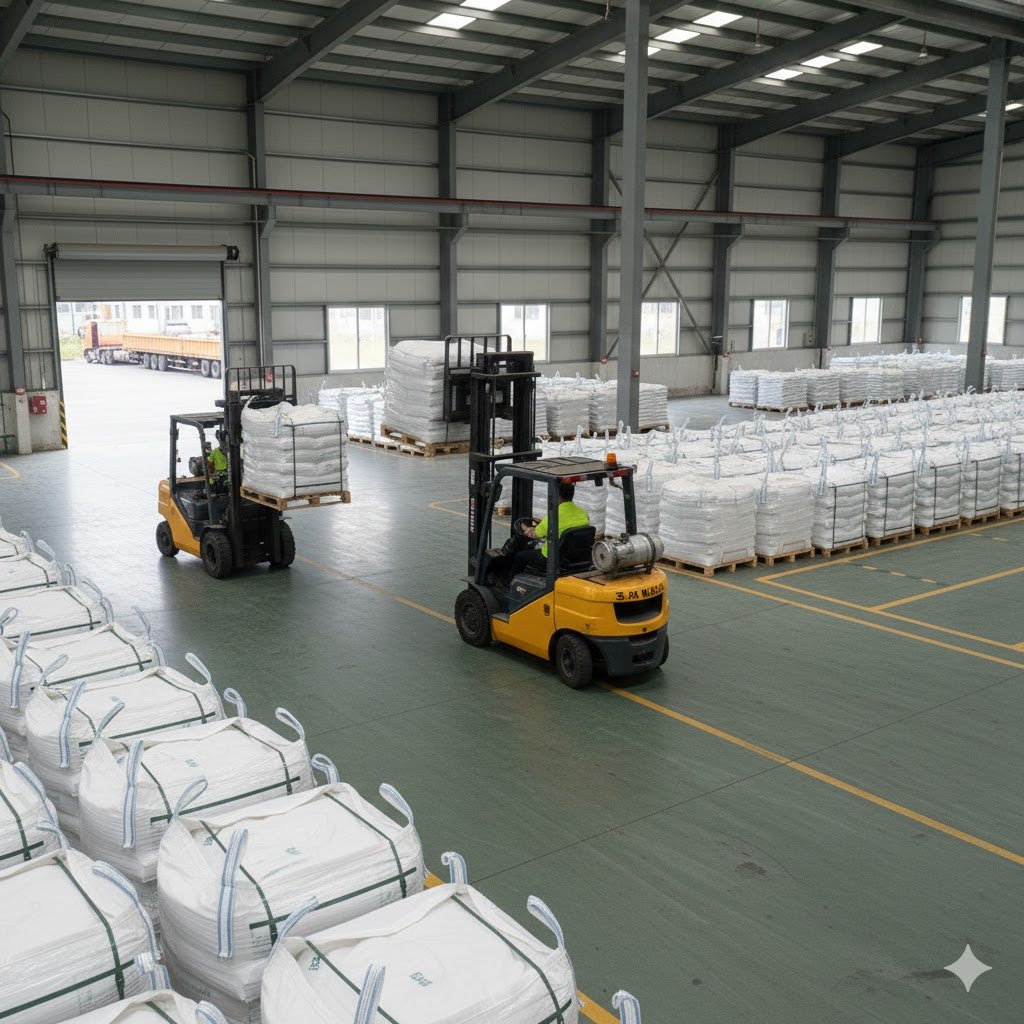
Proper kaolin clay storage and handling are essential for maintaining material cleanliness, controlling moisture exposure, and supporting consistent industrial processing. Whether you purchase kaolin powder in bags or bulk quantities, suitable packaging, warehouse conditions, and contamination-control procedures can help protect the material throughout storage and handling.
For manufacturers, distributors, and procurement teams, understanding how to store kaolin clay correctly can help reduce material-handling issues, prevent avoidable contamination, and maintain product suitability for its intended application.
In this guide, we cover the best practices for kaolin clay storage, moisture prevention, bulk powder handling, warehouse inspections, and packaging selection.
Best Practices for Storing Kaolin Clay
Kaolin clay should be stored in a clean, dry, covered warehouse using suitable packaging and handling procedures. The storage environment should protect the material from water, excessive moisture, dirt, chemicals, and other potential contaminants.
Follow these essential kaolin storage practices:
- Use appropriate packaging: Keep kaolin powder in suitable, securely closed packaging to reduce exposure to moisture and contaminants.
- Store bags on pallets: Use clean, dry, stable pallets or raised platforms to minimize contact with floor moisture and dirt.
- Maintain warehouse cleanliness: Keep storage areas clean and free from leaks, standing water, and incompatible materials.
- Inspect packaging regularly: Check bags and bulk containers for damage, moisture exposure, and compromised closures.
- Separate different grades: Maintain clear labels and segregate batches to reduce the risk of cross-contamination.
- Follow stock rotation procedures: Use a documented inventory system, such as first-in, first-out (FIFO) where appropriate, to manage stored material effectively.
The appropriate storage method depends on the kaolin grade, packaging type, intended application, and supplier's technical recommendations.
How to Prevent Moisture Contamination in Kaolin Powder
Moisture control is an important part of kaolin powder storage. Exposure to water or excessive humidity may cause powder to form lumps, affect flowability, and create handling difficulties during manufacturing.
To minimize moisture-related problems, store kaolin powder in sealed, suitable packaging inside a dry, covered warehouse. Keep packages away from damp walls and floors, repair roof leaks promptly, and inspect storage areas for signs of water ingress or condensation.
If kaolin powder becomes damp, assess the affected material against the relevant product specifications before using it in production. Do not assume that drying automatically restores its suitability for every application.
Bulk Kaolin Powder Storage in Industrial Warehouses
Bulk kaolin powder requires an organized storage and inventory management system to support safe handling and preserve material cleanliness. Depending on the order quantity and handling process, suitable storage options may include bags, bulk bags, or other compatible bulk-handling systems.
Industrial buyers and warehouse operators should consider the following measures:
- Packaging integrity: Verify that packaging is appropriate for the material and storage environment.
- Batch identification: Label different grades and batches clearly to maintain traceability.
- Safe stacking: Follow packaging load limits, pallet requirements, and site-specific stacking procedures.
- Equipment cleanliness: Keep transfer equipment and storage systems clean and suitable for the intended material.
- Inventory management: Record incoming deliveries, storage locations, batch details, and material movements.
- Periodic inspection: Establish a documented inspection schedule based on storage duration, environmental conditions, and product requirements.
These practices help improve warehouse organization and reduce the risk of moisture exposure, accidental contamination, and material identification errors.
What Packaging Is Suitable for Bulk Kaolin Powder?
The right packaging for bulk kaolin powder depends on the product grade, order quantity, transport method, handling equipment, and storage conditions.
Common options include appropriately specified bags, larger bulk bags, and compatible bulk-handling systems. Buyers should confirm packaging strength, moisture protection, load capacity, material compatibility, and handling requirements with their supplier before ordering.
For industrial procurement, it is also important to confirm whether the proposed packaging meets the requirements of the intended application and transportation arrangements.
Source Kaolin Clay for Your Industrial Requirements
Choosing the right kaolin clay involves evaluating product specifications, quality consistency, packaging options, technical documentation, and supply capabilities. Appropriate storage and handling procedures are equally important for maintaining material cleanliness and suitability throughout the supply chain.
Green Trade India offers kaolin clay products for industrial requirements. Explore the available product range to identify a suitable option for your application, or contact the team to discuss your required grade, order quantity, packaging preferences, and bulk procurement needs.
Looking for kaolin clay for your next industrial order? Contact Green Trade India to discuss your product specifications and sourcing requirements.
Kaolin Clay Storage and Handling: Frequently Asked Questions
1. How should kaolin clay be stored?
Kaolin clay should be stored in a clean, dry, covered warehouse away from water, excessive moisture, chemicals, and other potential contaminants. Keep the material in suitable packaging and place bags on clean, raised platforms to minimize contact with floor moisture and dirt. Regular inspections help identify packaging damage and storage problems before the material is used.
2. Does moisture affect kaolin clay quality?
Yes, moisture can affect kaolin powder flowability, handling, and processing performance. Exposure to water or excessive humidity may cause lumps to form and make the material more difficult to feed into manufacturing equipment. The impact depends on the product grade, exposure conditions, and intended application. Inspect moisture-exposed material and verify that it meets the relevant specifications before use.
3. What is the best way to prevent moisture contamination in kaolin powder?
The best way to prevent moisture contamination in kaolin powder is to use suitable sealed packaging and store it in a dry, covered warehouse. Keep bags on clean pallets, maintain clearance from damp walls and floors, repair leaks promptly, and inspect packaging for tears or damaged seals. Regular warehouse maintenance and housekeeping can help minimize moisture-related storage problems.
4. Can kaolin clay be stored outside?
Indoor storage in a dry, covered warehouse is generally preferable for kaolin clay. Outdoor storage can increase the risk of rain exposure, condensation, excessive moisture, and packaging damage. If temporary outdoor storage is unavoidable, use appropriate weather-resistant protection and raised platforms, and follow the supplier's storage instructions.
5. Does kaolin clay have a shelf life?
Kaolin clay does not have one universal shelf life that applies to every grade and industrial application. Its continued suitability depends on product specifications, packaging integrity, storage conditions, and intended use. Follow the supplier's recommendations for storage duration, inspection, and any required retesting. For applications with strict quality requirements, verify that stored material meets the applicable acceptance criteria before use.
6. Should kaolin powder be stored on pallets?
Yes, storing kaolin powder bags on suitable pallets or raised platforms helps reduce direct contact with floor moisture, dirt, and accidental water exposure. Pallets can also improve warehouse organization and facilitate inspections and inventory handling. Use clean, dry, stable pallets that are appropriate for the load, and follow recommended stacking and handling procedures.
7. How should bulk kaolin powder be stored in an industrial warehouse?
Bulk kaolin powder should be stored in a clean, dry, covered warehouse using suitable bags, bulk containers, or compatible storage systems. Separate grades and batches, maintain clear labels and inventory records, inspect packaging for damage, and follow safe stacking procedures. A documented stock rotation system, such as FIFO where appropriate, can help manage inventory and reduce prolonged storage.
8. How can contamination be prevented during kaolin clay handling?
Contamination during kaolin clay handling can be minimized by using clean, dry equipment, keeping packages closed when not in use, and preventing contact with oils, chemicals, dirt, and incompatible materials. Manufacturers should segregate grades and batches, clean transfer equipment when necessary, and maintain clear material identification. Isolate and assess suspected contaminated material against applicable quality requirements before releasing it for production.
9. What should buyers check when receiving a kaolin delivery?
When receiving a kaolin delivery, buyers should inspect packaging for damage, moisture, and visible contamination. Verify the product grade, batch identification, delivered quantity, and accompanying documentation against the purchase order. Review the Technical Data Sheet (TDS) and Certificate of Analysis (COA) when supplied or required. Record discrepancies and follow the facility's incoming quality-control procedures before approving the material for use.
10. How often should stored kaolin clay be inspected?
Inspection frequency should depend on storage duration, packaging type, warehouse conditions, product specifications, and the risk of moisture exposure. Establish a documented inspection schedule and check packaging integrity, visible dampness, labels, and signs of contamination. Conduct additional inspections after leaks, water ingress, flooding, handling incidents, or packaging damage. Follow supplier guidance and site-specific quality procedures.
11. What happens when kaolin powder gets wet?
When kaolin powder gets wet, it may form lumps, lose its free-flowing characteristics, and become more difficult to handle or feed into manufacturing equipment. The effects depend on the amount of moisture absorbed, exposure duration, product grade, and intended application. Assess damp or altered material against the relevant specifications before use rather than assuming that drying will restore its original suitability.
12. How can manufacturers prevent cross-contamination of kaolin clay?
Manufacturers can reduce cross-contamination by segregating different grades and batches, maintaining clear labels, cleaning handling equipment, and using suitable storage and transfer systems. Dedicated equipment or validated cleaning procedures may be necessary for applications with strict purity requirements. Maintain material movement records and isolate and assess any batch suspected of contamination before releasing it for production.
13. What packaging is suitable for bulk kaolin powder?
Suitable packaging for bulk kaolin powder depends on the product grade, order quantity, transportation method, handling equipment, and storage conditions. Options may include appropriately specified bags, bulk bags, or other compatible bulk-handling systems. Buyers should confirm packaging strength, moisture protection, material compatibility, load capacity, and handling requirements with their supplier before placing an order.