


As global industries seek high-performance, cost-effective, and sustainable raw materials, India has emerged as one of the world's leading sources of premium-quality kaolin clay, commonly known as China clay.
From ceramic tiles and paper production to paints, plastics, cosmetics, and pharmaceuticals, kaolin is an indispensable industrial mineral that supports manufacturing across multiple sectors. With abundant natural reserves, advanced processing capabilities, and increasing export demand, India is rapidly strengthening its position in the global kaolin market.
Green Trade India is among the trusted suppliers of industrial-grade kaolin products, delivering consistent quality, customized specifications, and export-ready solutions to customers worldwide.
What is Kaolin (China Clay)?
Kaolin is a naturally occurring white clay mineral primarily composed of kaolinite, a hydrated aluminum silicate. It is valued for its high brightness, fine particle size, chemical inertness, low abrasiveness, and excellent dispersion properties.
Chemical Formula
Al₂Si₂O₅(OH)₄
Key Characteristics of Kaolin
- High whiteness and brightness
- Fine and uniform particle size
- Excellent chemical stability
- Low electrical conductivity
- High opacity
- Good plasticity
- Non-toxic and environmentally safe
These properties make kaolin one of the most versatile industrial minerals used worldwide.
Why is Kaolin Called China Clay?
The term "China Clay" originated because kaolin was historically used in the production of fine porcelain and chinaware. Even today, it remains a critical raw material in ceramic manufacturing due to its whiteness, purity, and firing properties.
Where is Kaolin Found in India?
India possesses substantial reserves of high-quality kaolin deposits distributed across several mineral-rich states.
Major Kaolin-Producing States in India
1. Gujarat
Gujarat is India's leading producer and exporter of high-brightness kaolin. The state's deposits are widely used in ceramics, paper coatings, paints, and industrial fillers.
2. Rajasthan
Known for its high-purity clay reserves, Rajasthan supplies kaolin to ceramic, sanitaryware, and refractory industries.
3. West Bengal
West Bengal contributes significantly to the paper, paint, and coating sectors with versatile kaolin deposits.
4. Kerala
Kerala produces fine-grade kaolin suitable for cosmetics, pharmaceutical applications, and specialty industrial products.
Other Producing Regions
- Jharkhand
- Odisha
- Andhra Pradesh
- Tamil Nadu
These regions continue to contribute to India's expanding industrial mineral sector.
Why is Kaolin Important for Modern Manufacturing?
Kaolin is much more than a simple clay mineral. It acts as a functional ingredient that improves product performance, enhances appearance, reduces manufacturing costs, and increases durability.
Industries rely on kaolin because it delivers multiple benefits simultaneously:
- Improves whiteness and brightness
- Enhances product strength
- Increases opacity
- Improves surface smoothness
- Provides chemical resistance
- Reduces production costs
- Enhances processing efficiency
This unique combination makes kaolin one of the most valuable industrial minerals in the global market.
Top Industrial Applications of Kaolin Clay
1. Kaolin in the Ceramic Industry
The ceramic sector remains the largest consumer of kaolin worldwide.
Kaolin improves the plasticity, strength, whiteness, and firing performance of ceramic products.
Common Ceramic Applications
- Floor tiles
- Wall tiles
- Porcelain products
- Sanitaryware
- Tableware
- Electrical insulators
Benefits
✓ Better shaping and molding
✓ Improved firing characteristics
✓ Enhanced whiteness
✓ Higher mechanical strength
2. Kaolin in Paper Manufacturing
Kaolin serves as both a filler and coating pigment in paper production.
Its fine particle structure significantly improves paper quality and print performance.
Benefits in Paper Production
- Improved brightness
- Better opacity
- Enhanced printability
- Smoother surface finish
- Reduced production costs
Paper Products Using Kaolin
- Printing paper
- Writing paper
- Packaging paper
- Coated paper
- Specialty paper grades
3. Kaolin in Paints and Coatings
Modern paint formulations depend on kaolin to improve performance while optimizing production costs.
Advantages
- Increased opacity
- Better pigment suspension
- Improved weather resistance
- Enhanced surface finish
- Lower formulation costs
Applications
- Decorative paints
- Industrial coatings
- Protective coatings
- Architectural paints
4. Kaolin in Rubber Manufacturing
Kaolin functions as a reinforcing and extending filler in rubber products.
Benefits
- Improved tensile strength
- Enhanced flexibility
- Better abrasion resistance
- Increased durability
Applications
- Automotive tires
- Rubber hoses
- Industrial rubber goods
- Footwear components
5. Kaolin in Plastics Industry
Plastic manufacturers use micronized kaolin to improve material performance and dimensional stability.
Advantages
- Improved stiffness
- Better heat resistance
- Enhanced surface quality
- Reduced shrinkage
- Lower raw material costs
Applications
- PVC products
- Packaging materials
- Engineering plastics
- Household products
6. Kaolin in Cosmetics and Personal Care
Due to its gentle and absorbent nature, refined kaolin is widely used in skincare and cosmetic formulations.
Common Uses
- Face masks
- Talcum powders
- Facial cleansers
- Beauty creams
- Body powders
Benefits
- Absorbs excess oil
- Cleanses skin naturally
- Non-irritating
- Suitable for sensitive skin
7. Kaolin in Pharmaceutical Applications
Pharmaceutical-grade kaolin is used in medicinal formulations where purity and safety are essential.
Applications
- Medicinal powders
- Topical formulations
- Specialty healthcare products
Key Advantages
- High purity
- Non-toxic composition
- Excellent absorption properties
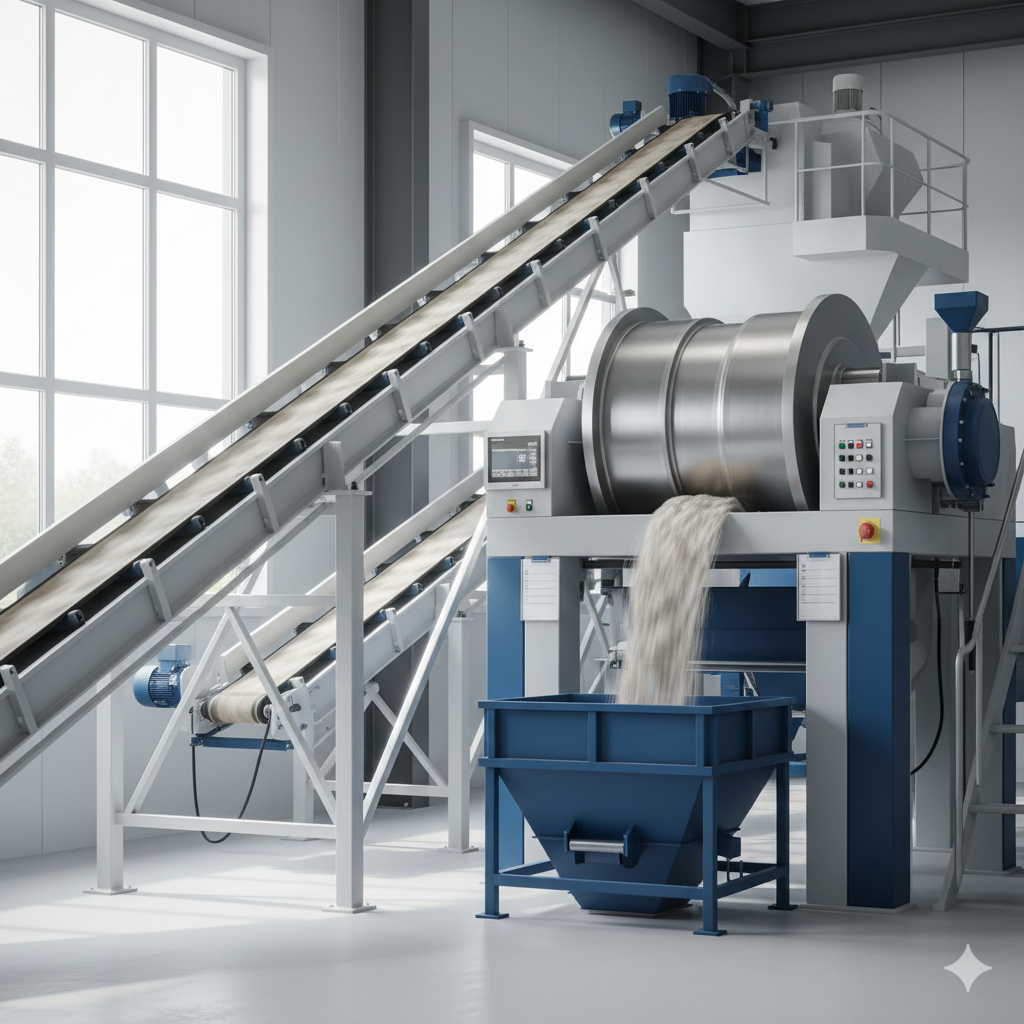
How Kaolin is Processed: From Mine to Industry
The performance of kaolin depends heavily on how it is processed.
At Green Trade India, advanced mineral processing technologies are employed to ensure consistent quality and international compliance.
Step 1: Mining and Extraction
Kaolin ore is extracted from carefully selected deposits.
Step 2: Crushing
Large clay lumps are reduced to manageable particle sizes.
Step 3: Washing and Beneficiation
Impurities such as quartz, iron oxides, and unwanted minerals are removed.
Step 4: Classification
Particles are separated according to industry-specific size requirements.
Step 5: Drying
Controlled drying removes excess moisture.
Step 6: Micronization
Advanced grinding technology produces ultra-fine kaolin powders.
Step 7: Quality Testing
Every batch undergoes testing for:
- Brightness
- Whiteness
- Particle size distribution
- Moisture content
- Chemical composition
- Industrial suitability
Types of Kaolin Products Available
Different industries require different grades of kaolin.
1. Crude Kaolin
Suitable for basic industrial applications where extensive refinement is unnecessary.
2. Washed Kaolin
High-purity grade commonly used in:
- Ceramics
- Paper
- Paints
- Rubber
3. Micronized Kaolin Powder
Ultra-fine processed kaolin powder ideal for:
- Plastics
- Paints
- Coatings
- Cosmetics
- Specialty applications
4. Kaolin Noodles
Custom-processed kaolin noodles designed for specific industrial manufacturing requirements.
Indian Kaolin Market Trends 2026
The Indian kaolin industry is experiencing strong and sustained growth driven by rising industrial demand and export opportunities.
Key Growth Drivers
1. Expansion of Ceramic Manufacturing
India's ceramic industry continues to expand rapidly, increasing demand for high-quality kaolin.
2. Rising Demand for Sustainable Packaging
Growth in paper-based packaging solutions is boosting kaolin consumption in paper manufacturing.
3. Infrastructure and Construction Growth
Increasing construction activity is driving demand for paints, coatings, adhesives, and related products.
4. Growth in Plastic and Polymer Industries
Industrial fillers such as micronized kaolin are becoming increasingly important in modern plastic manufacturing.
5. Export Market Expansion
Indian kaolin exports are growing across:
- Middle East
- Southeast Asia
- Europe
- Africa
Why Global Buyers Prefer Indian Kaolin?
International manufacturers increasingly source kaolin from India due to:
- Large mineral reserves
- Consistent product quality
- Competitive pricing
- Reliable export infrastructure
- Custom industrial grades
- Advanced processing technologies
India is expected to remain one of the fastest-growing suppliers of industrial kaolin in the coming years.
How to Choose the Right Kaolin Supplier
Selecting the right supplier directly impacts product quality and manufacturing efficiency.
Consider the following factors:
1. Quality Assurance
Choose suppliers that provide third-party testing and quality certifications.
2. Product Consistency
Consistent particle size and chemical composition are essential.
3. Processing Capabilities
Modern beneficiation and micronization facilities ensure superior product performance.
4. Export Expertise
Global logistics support reduces supply chain risks.
5. Technical Support
Experienced suppliers can recommend suitable grades for specific applications.
Why Choose Green Trade India?
Green Trade India is committed to delivering premium-quality kaolin products tailored to diverse industrial requirements.
Our Advantages
✓ SGS-tested quality assurance
✓ Multiple industrial grades available
✓ Bulk supply capability
✓ Export-ready packaging
✓ Customized specifications
✓ Reliable international logistics
✓ Environmentally responsible processing
Whether you require kaolin for ceramics, paper manufacturing, paints, plastics, rubber, cosmetics, or pharmaceutical applications, Green Trade India provides dependable solutions backed by quality, consistency, and global service standards.
Final Thoughts
Kaolin remains one of the most important industrial minerals supporting global manufacturing. With abundant reserves, advanced processing infrastructure, and increasing export capabilities, India is becoming a preferred destination for sourcing premium-quality kaolin products.
As demand continues to grow across ceramics, paper, paints, plastics, cosmetics, and pharmaceuticals, partnering with an experienced supplier becomes critical. Green Trade India delivers the quality, consistency, and technical expertise required by modern industries worldwide.
Our Popular Products
Raw Kaolin | Kaolin Powder | Kaolin Noodles
Frequently Asked Questions
1. What is kaolin clay used for?
Kaolin is widely used in ceramics, paper, paints, coatings, plastics, rubber, cosmetics, pharmaceuticals, and construction materials.
2. Which state produces the best kaolin in India?
Gujarat is widely recognized as one of India's leading producers and exporters of high-quality kaolin clay.
3. What is micronized kaolin?
Micronized kaolin is ultra-fine processed kaolin used in paints, plastics, coatings, cosmetics, and other high-performance applications.
4. Is India a major exporter of kaolin?
Yes. India exports significant quantities of kaolin to Asia, Europe, the Middle East, and Africa.
5. Why is kaolin important in ceramics?
Kaolin improves whiteness, strength, plasticity, and firing performance, making it essential for ceramic manufacturing.
6. What should buyers look for when purchasing kaolin?
Buyers should evaluate purity, brightness, particle size, certifications, consistency, and supplier reliability.