


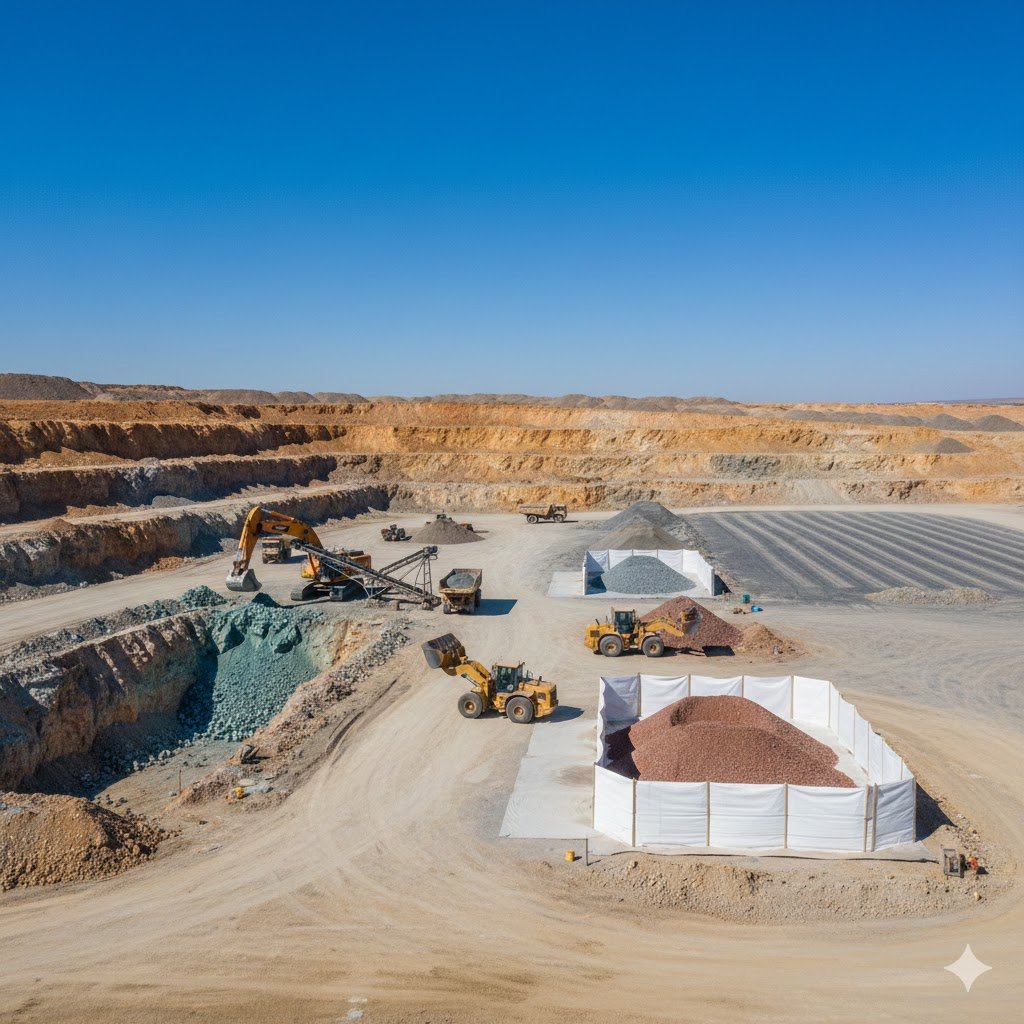
Sustainable clay mining reduces land degradation, protects water resources, controls dust pollution, and restores mined land for future use. At Green Trade India, eco-friendly mining practices ensure high-quality kaolin clay production while preserving environmental balance and supporting long-term industrial sustainability.
Introduction: Responsible Mining for a Sustainable Future
At Green Trade India, responsible resource extraction is at the core of our manufacturing philosophy. As a leading manufacturer and exporter of kaolin clay from India, we recognize that controlling the environmental impact of clay mining is essential for sustainable industrial development, community health, and ecosystem protection.
Our approach combines advanced technology, eco-friendly clay mining practices, and strict quality control to deliver premium industrial minerals without compromising the environment.
Understanding the Environmental Impact of Clay Mining
The environmental impact of clay mining mainly includes:
- Land degradation and soil erosion
- High water consumption
- Air pollution from dust particles
- Waste generation and disposal challenges
- Disturbance to local ecosystems and biodiversity
If mining activities are not properly managed, they can contaminate nearby water sources, damage vegetation, and disrupt agricultural land. The bentonite mining environmental impact and kaolin extraction challenges are similar in nature, making responsible planning and site assessment critical before mining begins.
At Green Trade India, detailed environmental studies help ensure mining activities coexist with surrounding natural systems.
Key Environmental Risks in Clay Mining
The primary environmental risks associated with clay mining include:
- Land degradation: Removal of topsoil affects fertility and vegetation growth
- Groundwater depletion: Excessive water use can reduce water availability in nearby communities
- Dust emissions: Fine particles impact air quality and worker health
- Long-term ecosystem disturbance: Loss of habitat affects plant and animal life
Addressing these risks through sustainable mining practices is essential for long-term industry stability.
Importance of Sustainable Clay Mining
Sustainable clay mining focuses on extracting natural resources responsibly while preserving the environment for future generations. It emphasizes:
- Controlled and measured extraction
- Efficient use of water and energy
- Proper waste management
- Post-mining land restoration
- Compliance with environmental regulations
In India, sustainable mining practices play a vital role in protecting natural resources, supporting supply chain stability, and building long-term customer trust.
At Green Trade India, our operations align with international environmental standards and regulatory frameworks to ensure environmentally responsible production.
How Sustainable Clay Mining Supports ESG Goals
Sustainable mining directly supports Environmental, Social, and Governance (ESG) objectives by:
- Reducing carbon footprint through energy-efficient operations
- Conserving water resources through recycling and treatment systems
- Protecting biodiversity through controlled land use
- Ensuring worker safety and community well-being
- Ensuring regulatory compliance and transparent operations
These practices strengthen our position as a responsible industrial minerals supplier in global markets.
Eco-Friendly Clay Mining Practices We Follow
Eco-friendly clay mining practices are embedded throughout our operations at Green Trade India.
1. Selective Extraction
We adopt controlled excavation methods to minimize land disturbance and prevent excessive extraction.
2. Dust Control Systems
Advanced dust suppression equipment significantly reduces airborne particles, protecting workers and nearby communities.
3. Waste Management & Recycling
Strict waste management guidelines promote reuse and recycling of by-products, reducing landfill dependency and environmental footprint.
4. Land Reclamation
Post-mining land restoration programs help rehabilitate mined areas for agriculture, vegetation growth, or future development.
These measures collectively reduce the environmental impact of clay mining and promote long-term sustainability.
Kaolin Clay Mining Sustainability at Green Trade India
Kaolin clay mining sustainability requires balancing high-quality production with environmental responsibility.
Our Gujarat-based manufacturing facility is equipped with:
- Energy-efficient processing machinery
- Advanced water recycling and treatment systems
- Low-emission material handling processes
By reducing freshwater consumption and preventing wastewater discharge into natural sources, we protect local water reserves and maintain ecological balance.
This ensures a consistent supply of premium kaolin clay while safeguarding environmental resources.
Sustainable Mining Practices in India: Our Role
As an Indian manufacturer exporting to global markets, Green Trade India actively promotes sustainable mining practices in India.
Our initiatives include:
- Continuous staff training on environmental management
- Regular internal and external environmental audits
- Adoption of international best practices
- SGS-certified quality and environmental management systems
These efforts demonstrate our commitment to low-carbon industrial development and responsible mineral production.
Our Commitment to a Sustainable Future
Green Trade India is committed to building a sustainable future through:
- Eco-friendly clay mining practices
- Advanced processing technology
- Stringent quality and environmental controls
- Responsible community engagement
We strive to be recognized as a global industry partner that delivers world-class industrial minerals while protecting and enhancing natural ecosystems.
Our Popular Products
Raw Kaolin | Kaolin Powder | Kaolin Noodles
Frequently Asked Questions (FAQs)
1. What is the environmental impact of clay mining?
Clay mining can cause land degradation, water pollution, dust emissions, and ecosystem disturbance if not properly managed.
2. What is sustainable clay mining?
Sustainable clay mining is the practice of extracting clay while minimizing environmental damage, conserving resources, managing waste responsibly, and restoring mined land.
3. How does sustainable clay mining reduce environmental damage?
It reduces land disturbance, recycles water, controls dust emissions, manages waste effectively, and restores mined areas after extraction.
4. Why is sustainable mining important in India?
Sustainable mining protects natural resources, supports regulatory compliance, preserves water reserves, and ensures long-term industrial growth.
5. What are eco-friendly practices used in bentonite mining?
Controlled excavation, dust suppression, water reuse, energy-efficient processing, and land reclamation are common eco-friendly practices.
6. How is kaolin clay mined sustainably?
Through controlled extraction, efficient water use, recycling systems, advanced machinery, and strict adherence to environmental standards.
7. How does clay mining affect water resources?
Unplanned mining can deplete groundwater and pollute nearby sources, while sustainable mining emphasizes water recycling and conservation.
8. How do mining companies reduce water consumption?
By installing water treatment plants, reusing process water, and optimizing washing and processing systems.
9. What certifications indicate responsible mining practices?
Certifications such as SGS, ISO environmental standards, and regulatory compliance certificates indicate responsible mining operations.
10. What makes Green Trade India an environmentally responsible supplier?
Our eco-friendly mining methods, water recycling systems, dust control measures, land restoration programs, and certified management systems demonstrate our commitment to sustainability.