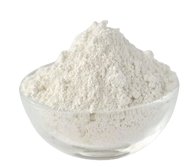
Kaolin Clay (China Clay) in granules form for convenient handling, storage, and controlled feeding during processing.
Off-white to white granules with high purity, low iron, and good thermal stability for industrial use.
| Material | Kaolin Clay (China Clay) |
| Color | Off-white to white |
| Form | Granules |
| Style | Industrial mineral |
| Feature | High purity, low iron, good thermal stability |
Suitable for industries that prefer controlled handling and consistent feeding during processing.
HDPE bags / PP bags / Jumbo bags
| Content | SiO to ‚‚ | Al to ‚‚O to ‚ƒ | MgO | K to ‚‚O | Whiteness | Purity |
|---|---|---|---|---|---|---|
| Typical | 45% to 55% | 35% to 38% | ≤ 0.5% | 1.5% to 3.0% | 75% to 90% | 95% to 99% |
| Specification | Details | Specification | Details |
|---|---|---|---|
| Melting Point | 1750 °C to 1785 °C | Thermal Conductivity | Low |
| Specific Gravity | 2.55 to 2.65 | Dimensional Stability | Excellent at high temperatures |
| Density | 2.4 to 2.6 g/cm³ | Porosity | Low to medium |
| Strength | Moderate (improves after firing) | Water Absorption | 10% to 18% |
| Hardness | 2 to 2.5 (Mohs scale) | Foam | Nil |
| Moisture | 0.5 to 2.0% |
| Water Absorption | 40 to 60% |
| Water of Plasticity | 30 to 38% |
| Oil Absorption | 30 to 45 g/100g |
| Content | Data |
|---|---|
| Hardness (Mohs) | 2.0 to 2.5 |
| Modulus of rupture (dry) | 2 to 5 MPa |
| Dimensions stability | Excellent (low thermal expansion) |
| Sagging | Very low (due to refractory nature) |
| Content | Data |
|---|---|
| Drying contraction | 2 to 4% |
| Firing contraction | 1 to 3% |
| Total contraction | 3 to 7% |
| Contraction (overall) | Low compared to ball clay |
| Thermal Conductivity | 0.2 to 0.4 W/m·K |
| Firing Temperature | 1100 to 1300 °C |
| Thermal cycles resistance | Good |
| Cycles (mins) | 30 to 90 min (typical firing soak) |
| Content | pH (aqueous slurry) | Fluorine (F) | MgO | Water-soluble salts |
|---|---|---|---|---|
| Typical | 4.5 to 6.5 | <0.01% | 0.05 to 0.5% | <0.1% |
| Component | Typical Range |
|---|---|
| Kaolinite | 85 to 98% |
| Mica / Illite | 0 to 5% |
| Quartz | 1 to 10% |
| Feldspar / Anatase (trace) | <1% |
Quality checks and documentation to support consistent supply
We follow standard checks to ensure consistent quality and compliance.
Quality, reliability, transparency, and customer support in every shipment.
Any test reports can be shared on request at an additional cost, including third-party testing where required.
Processed grades suitable as fillers for ceramics, paper, paints, and coatings.
Common questions about Kaolin Granules
Kaolin clay granules are used in ceramics, refractories, plastics, rubber, fertilizers, coatings, and chemical processing industries.
Yes, kaolin clay granules have good thermal stability, making them suitable for high-temperature industrial applications.
The granular form ensures dust-free handling, better flowability, controlled feeding, and reduced processing waste.
Yes, kaolin clay granules are ideal for bulk handling, storage, and continuous industrial processing.
Kaolin Clay Granules, also known as China Clay Granules, are high-purity processed clay materials manufactured in granular form for convenient handling, dust-free storage, and controlled feeding in industrial applications.
These off-white to white granules is characterized by low iron content, excellent chemical purity, and good thermal stability, making them suitable for a wide range of industrial and manufacturing processes. The granular form ensures uniform flowability, reduced material loss, and consistent performance during processing.
Green Trade India supplies premium-grade kaolin clay granules for domestic and export markets.
Kaolin Clay Granules are a processed form of natural kaolin (china clay) converted into granules to improve material handling, dosing accuracy, and process efficiency in industrial operations.
Kaolin clay granules are widely used in:
Low-iron kaolin clay granules provide better whiteness, higher chemical stability, and improved performance, especially in applications where purity and color consistency are critical.