


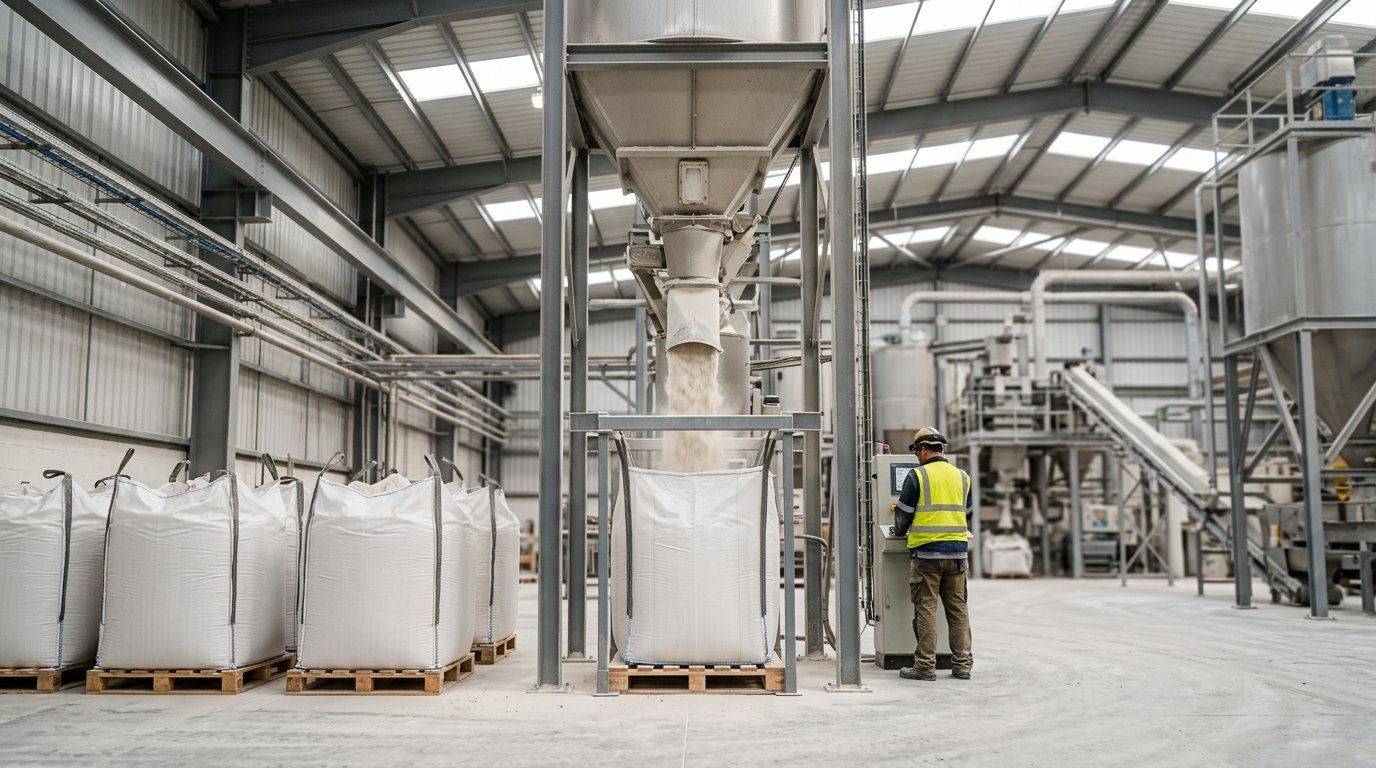
Kaolin clay is a versatile industrial mineral used across paper manufacturing, ceramics, paints and coatings, plastics, rubber, refractories, construction, agriculture, cosmetics, and specialty chemical formulations. Its fine particle size, natural brightness, chemical stability, low abrasiveness, and heat-resistant characteristics make it valuable in a wide range of manufacturing processes.
For manufacturers, understanding the industrial uses of kaolin clay is important because the right grade and quality of kaolin can influence processing efficiency, product appearance, consistency and final performance.
At Green Trade India, we supply quality kaolin products for industrial applications and help businesses select materials according to their manufacturing requirements.
Quick Answer: What Is Kaolin Clay Used For?
Kaolin clay is primarily used as a filler, coating pigment, functional additive or mineral component in industrial products. Some of its most common applications include paper and packaging, ceramic and porcelain products, paints and coatings, rubber, plastics, refractory materials, construction products, agriculture and specialty chemicals.
The best kaolin grade depends on the intended application, required specifications and manufacturing process.
10 Industrial Uses of Kaolin Clay
1. Paper Manufacturing
Paper manufacturing is one of the most established kaolin clay applications.
Kaolin is used as a coating pigment and filler to improve properties such as:
- Brightness
- Opacity
- Smoothness
- Printability
- Surface finish
Coated papers, printing papers, packaging materials, magazines and other premium paper products can use kaolin as part of their formulation.
For paper manufacturers, consistent particle size, brightness and mineral quality are important when selecting kaolin for production. Read our full guide to kaolin clay for paper manufacturing.
2. Ceramic and Porcelain Manufacturing
Kaolin powder is an important raw material in many ceramic formulations because of its plasticity, whiteness and contribution to ceramic body properties.
It is used in products such as:
- Porcelain
- Floor tiles
- Wall tiles
- Sanitary ware
- Tableware
- Ceramic decorative products
During firing, kaolin participates in the transformation of the ceramic body and can contribute to the strength, appearance and dimensional characteristics of the finished product.
For ceramic manufacturers, choosing an appropriate kaolin grade for ceramics can help achieve consistent results from batch to batch.
3. Paints and Coatings
Kaolin is widely used as a functional mineral in paints, primers and coating formulations.
Depending on the grade and formulation, kaolin can help manufacturers achieve:
- Improved surface texture
- Better suspension
- Controlled gloss
- Enhanced coating performance
- Improved scrub resistance
- Consistent finish
Its fine particle size and mineral characteristics make kaolin useful in both decorative and industrial coating formulations.
The appropriate kaolin grade should be selected according to the coating system and desired performance. See our detailed guide on kaolin clay in paints & coatings.
4. Rubber Manufacturing
Another important use of kaolin clay is as a filler in rubber products.
Kaolin can be incorporated into formulations for products such as:
- Rubber footwear
- Hoses
- Gaskets
- Seals
- Belts
- Other molded rubber products
In suitable formulations, kaolin can contribute to stiffness, dimensional characteristics, surface appearance and overall processing performance.
For rubber manufacturers, particle characteristics and compatibility with the formulation are important considerations when selecting industrial kaolin.
5. Plastic Manufacturing
Kaolin is used in various plastic formulations, including applications involving polymers such as PVC and other plastics.
Manufacturers may use kaolin to support properties such as:
- Rigidity
- Dimensional stability
- Reduced shrinkage
- Surface appearance
- Processing characteristics
The performance of kaolin depends on factors such as particle size, treatment, dispersion and the polymer system in which it is incorporated.
Therefore, plastic manufacturers should select kaolin according to their specific formulation and performance requirements. Learn more in our guide to kaolin clay in plastics & rubber.
6. Refractory Materials
Kaolin's thermal characteristics make it useful in refractory and high-temperature applications.
Depending on the formulation and grade, kaolin can be used in materials associated with:
- Refractory bricks
- Kiln-related materials
- Furnace materials
- Insulating products
- Castable refractory formulations
Refractory manufacturers work with mineral raw materials that can withstand demanding thermal environments. The suitability of a particular kaolin depends on its mineral composition, processing and the requirements of the finished refractory product.
7. Cement and Construction Products
Kaolin powder also has applications in selected construction and building-material formulations.
It can be incorporated into products such as:
- Specialized cement formulations
- White cement-related products
- Wall putty
- Construction chemicals
- Decorative building materials
- Selected surface-finishing products
In suitable formulations, kaolin can contribute to workability, consistency, appearance and surface characteristics.
Manufacturers should select construction-grade material based on the technical requirements of the finished product rather than using the same kaolin grade for every application.
8. Cosmetics and Personal Care Products
Processed kaolin is also used in selected cosmetic and personal-care formulations, including face masks, powders and soaps.
Its absorbent characteristics make it useful in formulations designed to manage excess oil and provide a particular skin feel or finish.
However, industrial kaolin and cosmetic-grade kaolin are not interchangeable. Cosmetic manufacturers should use appropriate cosmetic-grade material that meets the relevant quality and regulatory requirements for the intended application. See our kaolin for cosmetics range.
9. Agriculture and Crop Protection
One of the growing kaolin powder applications is agriculture.
Processed kaolin can be used in certain crop-protection formulations that create a mineral coating or particle film on plant surfaces.
These applications can help provide a physical barrier and may support crop protection strategies involving heat and insect-related stresses.
The suitability of kaolin depends on the crop, formulation, application method and applicable agricultural requirements. Read more in our guide to kaolin clay in agriculture.
10. Adhesives, Sealants and Specialty Chemicals
Kaolin can function as a mineral filler in selected adhesives, sealants, joint compounds and specialty chemical formulations.
Depending on the formulation, it can contribute to:
- Consistency
- Viscosity control
- Workability
- Dimensional characteristics
- Reduced shrinkage
- Product stability
Because different formulations require different performance characteristics, manufacturers should select kaolin according to the chemistry and processing requirements of the final product.
Why Is Kaolin Clay Used in So Many Industries?
The versatility of kaolin comes from a combination of physical and chemical characteristics.
Important properties can include:
- Fine particle size
- Natural brightness
- Chemical stability
- Low abrasiveness
- Thermal characteristics
- Surface properties
- Dispersion characteristics
- Filler functionality
However, not all kaolin is the same. Mineral composition, processing, particle-size distribution, brightness, moisture and other specifications can vary significantly between products.
That is why application-specific grade selection is important for industrial manufacturers.
Hydrous vs Calcined Kaolin: What's the Difference?
Kaolin used in industry can be supplied in different forms depending on how it has been processed. Read our full comparison of hydrous kaolin vs calcined kaolin.
Hydrous Kaolin
Hydrous, or water-washed, kaolin retains its characteristic mineral structure and is commonly used in applications such as:
- Paper
- Paints and coatings
- Plastics
- Rubber
- Ceramics
- Other filler applications
Calcined Kaolin
Calcined kaolin is heat-treated to modify its physical and functional characteristics.
It is used in selected applications where properties associated with calcination are beneficial, including certain:
- Paint and coating formulations
- Plastics
- Rubber products
- Construction materials
- Specialty applications
The choice between hydrous and calcined kaolin should be based on the required performance of the final product.
How to Choose Kaolin for Industrial Applications
Choosing the right kaolin is not simply about purchasing the highest-purity mineral. Manufacturers should match the material to the requirements of their formulation and production process.
Consider:
- Application and end product — Paper, ceramics, paint, plastic and rubber applications can require different grades.
- Particle-size distribution — Particle characteristics can influence dispersion, finish and processing.
- Brightness and whiteness — Particularly important for applications where appearance matters.
- Chemical composition — Mineral composition should meet the formulation's requirements.
- Moisture content — Important for handling, storage and processing.
- Processing method — Hydrous and calcined kaolin can provide different functional characteristics.
- Batch consistency — Consistent raw material quality helps manufacturers maintain predictable production.
- Supplier quality control — Reliable testing and quality-control procedures are important for industrial procurement.
- Packaging and logistics — Suitable packaging and dependable supply help maintain production continuity.
- Technical support — Application-specific guidance can help manufacturers identify the appropriate grade.
Kaolin Clay Applications by Industry
| Industry | Typical Kaolin Use | Main Application Benefit |
|---|---|---|
| Paper | Coating and filler | Brightness, opacity and smoothness |
| Ceramics | Ceramic body and porcelain | Plasticity and whiteness |
| Paints | Functional filler | Texture and coating performance |
| Rubber | Mineral filler | Stiffness and dimensional properties |
| Plastics | Functional filler | Rigidity and dimensional stability |
| Refractories | High-temperature materials | Thermal performance |
| Construction | Putty and selected building materials | Workability and finish |
| Cosmetics | Masks, powders and soaps | Absorbent functionality |
| Agriculture | Particle-film applications | Crop-protection support |
| Chemicals | Functional filler | Consistency and formulation performance |
Why Kaolin Quality Matters for Manufacturers?
For industrial buyers, the performance of kaolin depends on more than its name.
Consistent quality can help manufacturers maintain consistent production.
Variations in mineral composition, particle size, brightness, moisture or other specifications can affect how kaolin behaves within a formulation.
Manufacturers should therefore evaluate:
- Product specifications
- Test reports
- Batch consistency
- Application suitability
- Packaging
- Supply capacity
- Quality-control procedures
- Supplier reliability
A kaolin supplier with appropriate quality-control processes can help businesses source material more consistently for ongoing production. Read our full kaolin clay supplier checklist.
Kaolin Clay: From Mineral to Manufacturing Solution
The wide range of kaolin clay industrial applications demonstrates why this mineral remains important across modern manufacturing.
From paper and ceramics to paints, plastics, rubber, refractories, construction, agriculture and specialty chemicals, kaolin can perform different roles depending on its grade, processing and formulation.
At Green Trade India, we focus on supplying quality kaolin products for industrial applications. Our goal is to support manufacturers with dependable mineral products suited to their specific production requirements.
Looking for kaolin for your manufacturing application? Contact Green Trade India to discuss your grade, quantity, and application requirements.
Our Popular Categories
Kaolin Powder | Kaolin Noodles | Kaolin Granules
Frequently Asked Questions About Kaolin Clay
1. What are the main industrial uses of kaolin clay?
The main industrial uses of kaolin clay include paper manufacturing, ceramics, paints and coatings, plastics, rubber, refractory materials, construction products, agriculture, cosmetics and specialty chemical formulations.
2. Which industries use kaolin clay the most?
Major kaolin-consuming industries include paper, ceramics, paints and coatings, plastics and rubber. Kaolin is also used in construction, refractories, agriculture and specialty formulations.
3. What is kaolin clay used for in manufacturing?
Kaolin can be used as a filler, coating pigment, functional additive or mineral component. Its specific function depends on the grade, processing method and manufacturing formulation.
4. How is kaolin clay used in the paper industry?
Kaolin is commonly used as a coating pigment and filler to support paper brightness, opacity, smoothness, printability and surface finish.
5. Why is kaolin used in ceramic manufacturing?
Kaolin contributes properties such as plasticity and whiteness to ceramic formulations and is widely used in products including porcelain, tiles, sanitary ware and tableware.
6. How is kaolin used in paints and coatings?
Kaolin can function as a mineral filler or extender in paints and coatings, helping manufacturers achieve desired texture, suspension, gloss and surface-performance characteristics.
7. What is the difference between hydrous and calcined kaolin?
Hydrous kaolin is generally processed without calcination, while calcined kaolin is heat-treated to modify its physical and functional properties. The appropriate type depends on the intended application.
8. Is kaolin used in plastic manufacturing?
Yes. Kaolin can be used as a functional filler in selected plastic formulations to support properties such as rigidity, dimensional stability, shrinkage control and surface characteristics.
9. Is kaolin used in rubber products?
Yes. Kaolin can be used as a mineral filler in rubber products such as hoses, gaskets, seals, footwear and other molded rubber applications.
10. How do I choose the right kaolin grade for my industry?
The right grade depends on the end application and required specifications. Manufacturers should evaluate factors such as particle size, brightness, chemical composition, moisture, processing method, purity, batch consistency and formulation compatibility.
11. Is industrial kaolin the same as cosmetic-grade kaolin?
No. Industrial and cosmetic applications can have different material specifications and quality requirements. Cosmetic manufacturers should use kaolin that meets the appropriate requirements for cosmetic applications.
12. How can I source kaolin for industrial manufacturing?
Businesses should evaluate the supplier's product specifications, quality-control practices, consistency, available grades, packaging, supply capacity and ability to meet their application requirements before selecting an industrial kaolin supplier.